

Outrigger Canoe Protective Sleeves: 2026 Guide
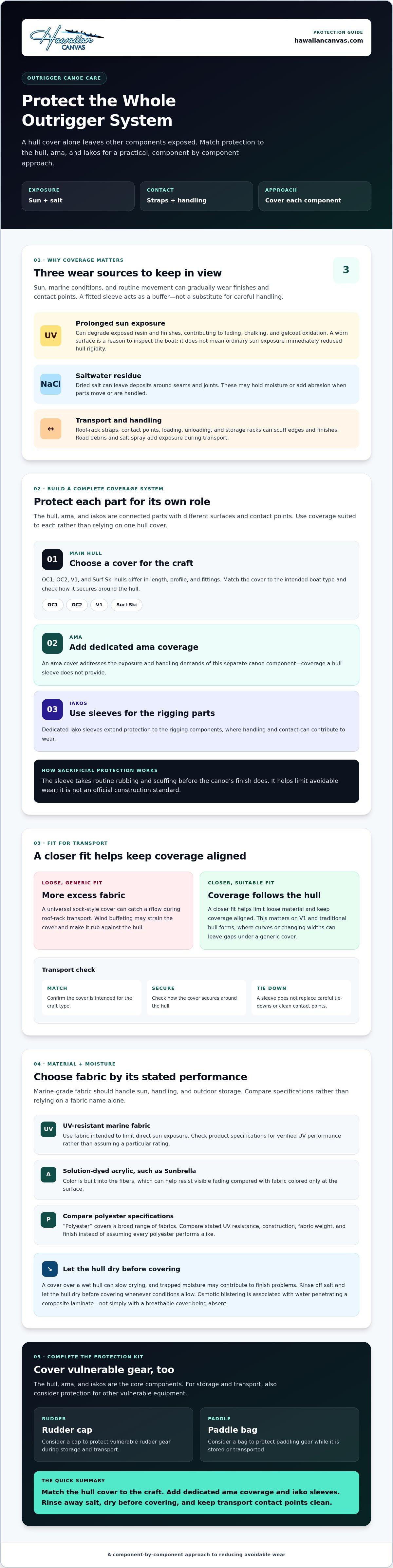
A hull cover alone won’t protect every part of an outrigger canoe. The hull, ama, and iakos each face wear from UV exposure, saltwater, and handling. Protective sleeves for outrigger canoes work best as a system, with coverage matched to each component.
If you’ve noticed a faded finish after storage, new scratches after a roof-rack trip, or wear around rigging, you know how quickly exposure and handling can add maintenance. The right covers and sleeves help shield vulnerable parts and reduce avoidable wear. They’re practical gear for paddlers who want their canoe ready for the next session, not another round of cleanup.
This 2026 guide explains what to protect and how to choose marine-grade coverage for the hull, ama, and iakos. You’ll learn how canoe covers, ama covers, and iako sleeves serve different roles, and what to consider for storage and transport. Hawaiian Canvas LLC designs and handcrafts heavy-duty, UV-resistant canoe and Surf Ski covers for paddlers everywhere.
Key Takeaways
- Understand how prolonged sun exposure and marine conditions can wear down canoe finishes and components, and why material choice matters.
- Match hull covers to your OC1, OC2, V1, or Surf Ski, and check fit carefully for secure transport.
- Use dedicated ama covers and iako sleeves to address the different exposure and handling demands of each component.
- Choose protective sleeves for outrigger canoes as a component-by-component system, rather than relying on a hull cover alone.
- Consider rudder caps and paddle bags to protect vulnerable gear during storage and transport.
The Science of Degradation: Why Protective Sleeves are Mandatory
Protective sleeves are fitted barriers made from materials intended to reduce exposure to sun, salt, abrasion, and handling damage. An outrigger canoe is a system of connected parts, including the hull, ama, and iako. As outlined in this overview of outrigger boats, each part has a distinct role, with different surfaces and contact points to protect.
Sun and salt can cause gradual wear. Ultraviolet exposure can break down resin at a composite surface, contributing to fading, chalking, and gelcoat oxidation. Saltwater left to dry can leave deposits in seams and around joints. These deposits may hold moisture or add abrasion when parts move or are handled. They don’t automatically cause structural fractures, but repeated exposure and movement can worsen existing wear.
A quick look at an outrigger setup can help put component protection in context:
The Threat of UV Radiation
Fiberglass and carbon-fiber structures depend on resin to bind and protect their reinforcing fibers. Prolonged, intense sun can degrade exposed resin and finishes. A worn surface is a reason to inspect the boat, but it doesn’t mean ordinary sun exposure has immediately reduced hull rigidity. Use a cover made with UV-resistant marine fabric to limit direct exposure. Materials such as Sunbrella are designed for demanding outdoor conditions. Check product specifications for verified UV performance rather than assuming a particular rating.
Abrasion and Impact During Transport
Roof-rack straps and contact points can rub against the hull. Loading, unloading, and sliding a canoe onto storage racks can also scuff its edges and finish. Road debris and salt spray add exposure during transport. A fitted sleeve adds a buffer at vulnerable surfaces, but it doesn’t replace careful tie-downs or clean contact points.
Sacrificial protection means the sleeve takes routine rubbing and scuffing before the canoe’s finish does. For practical maintenance, cover the hull, then protect the ama and iakos with their own covers or sleeves. This is a component-by-component approach to reducing avoidable wear, not an official construction standard. Protective sleeves for outrigger canoes help limit exposure and keep maintenance focused on paddling rather than preventable damage.
Hull Protection: Sleeves for OC1, OC2, and Surf Skis
The hull needs a cover suited to its craft and use. OC1, OC2, V1, and Surf Ski hulls differ in length, profile, and fittings, so a sleeve that fits one type may leave another loose or exposed. Hawaiian Canvas makes covers for these craft. The International Va'a Federation’s race rules offer context on the sport’s equipment and terminology. A cover protects gear, but it isn’t a substitute for meeting competition requirements.
Fit for Transport
A universal, sock-style cover may be convenient, but excess fabric can catch airflow during roof-rack transport. Wind buffeting can strain the cover and cause it to rub against the hull. A closer fit helps limit loose material and keeps coverage aligned with the craft’s shape. That matters on V1 and traditional hull forms, where pronounced curves or changing widths can leave gaps under a generic cover.
Before choosing, check the cover’s intended boat type and how it secures around the hull. For more on fit and cover selection, read the guide to custom outrigger canoe covers.
Material and Moisture
Marine-grade fabric must handle sun, handling, and outdoor storage. Solution-dyed acrylics such as Sunbrella have color built into the fibers, which can help resist visible fading compared with fabrics colored only at the surface. “Polyester” covers a broad range of fabrics, so compare stated UV resistance and construction instead of assuming every polyester performs alike. Fabric weight and finish matter too. Check the specifications for the intended use.
Breathability matters as well. A cover placed over a wet hull can slow drying, and trapped moisture may contribute to finish problems. Osmotic blistering is associated with water penetrating a composite laminate, not simply with a breathable cover being absent. Rinse off salt and let the hull dry before covering it whenever conditions allow.
Check the Details
Inspect more than the fabric. Reinforced seams and durable construction help a cover withstand repeated handling and transport. Use this checklist:
- Fit: Is it made for the hull type and shape?
- Fabric: Are UV resistance and intended marine use specified?
- Seams: Are high-stress areas reinforced?
- Drying: Can you cover the hull after it has dried?
The right protective sleeves for outrigger canoes combine suitable fabric with a secure, craft-specific fit. For covers made with marine-grade materials, explore Hawaiian Canvas canoe and Surf Ski covers.
Rigging Resilience: The Role of Iako Sleeves
Iakos, the spars that connect the ama to the hull, are handled repeatedly during setup, breakdown, loading, and storage. That routine contact can lead to scratches and “rigging rash,” especially when spars rub against racks, straps, or other equipment. Connection points deserve attention too: grit and dried salt around fittings can abrade surfaces as parts are assembled and adjusted.
An iako sleeve provides a protective layer around the spar during storage and transport. It can reduce direct rubbing and limit exposure to salt spray, but it isn’t a watertight barrier. Rinse salt from the iako and its fittings, then let them dry before covering. This helps avoid trapping salt or moisture inside the sleeve.
Protecting the Connection Points
Pay close attention to the areas where the iako meets the hull and ama. These joints are handled during assembly and can be vulnerable to bumps, scuffs, and grit. A sleeve that covers the spar without obstructing the fittings can help protect it between sessions. For multi-boat trailers, a padded sleeve may help cushion contact between stored spars, but check its construction and fit for your setup. Hawaiian Canvas offers dedicated iako sleeves for spar protection.
Built for Repeated Use
Fit and construction matter more than appearance alone. A handcrafted, heavy-duty sleeve is designed with repeated handling and marine conditions in mind. Examine stitching, closures, and areas likely to rub against hardware. Durable materials and reinforced construction are useful where a sleeve sees regular loading, salt spray, and contact with other gear. Review the materials and intended use rather than assuming every sleeve offers the same abrasion resistance.
There’s no reliable universal lifespan for a protected versus unprotected iako. Wear depends on the spar material, frequency of use, storage, and maintenance. A sleeve can reduce routine surface contact, while rinsing, drying, and inspecting the spar remain important.
For clubs and individual paddlers alike, iako sleeves can be part of a full protection kit alongside hull and ama covers. They address a component that might otherwise be left exposed between sessions. Protective sleeves for outrigger canoes work best as coordinated coverage for the hull, ama, and rigging, with each piece protected according to how it’s handled and stored.
The Balance Factor: Ama and Component Sleeves
The ama needs its own cover because protecting the hull doesn’t shield the float from sun, handling, or contact with other gear. Prolonged UV exposure and heat can contribute to material and finish degradation, while impact and abrasion can damage the ama’s surface. Delamination is a composite failure, not an inevitable result of a sunny day. Inspect the ama regularly and follow the canoe maker’s care guidance.
If the ama is air-filled, temperature changes can affect the air inside: warming can increase pressure, while cooling can reduce it. A sleeve can shade the surface, but it doesn’t regulate internal pressure or replace proper venting and storage instructions. Don’t assume a cover makes it safe to leave an ama sealed in direct heat.
Choose for Storage Conditions
A full-zip cover can make it easier to enclose an ama for longer-term storage, while a slip-on style may suit quick coverage between sessions. Choose based on fit, how often the ama is handled, and whether the cover can be secured without stressing the fabric. For a closer look at fit and cover considerations, see this guide to outrigger ama covers.
Side-stacking amas on a trailer creates another risk: surfaces can rub together or press against straps and nearby hardware. A fitted cover adds a buffer at those contact points. Check that it stays in place and doesn’t bunch where the ama rests against another object.
Material, Closure, and Fit
Fabric weight alone doesn’t determine protection. Heavier material may resist routine abrasion better, but fit, seam construction, and ease of securing the cover matter too. UV-resistant marine fabrics such as Sunbrella are designed for outdoor use. Confirm the specific fabric and construction details for the cover you’re considering. Reinforced ends are useful because ama tips can press into fabric during loading and storage.
- Full zipper: Encloses the ama and can simplify repeated removal, but inspect the closure for fit and durability.
- Slip-on or drawstring: Can be straightforward to put on, but should fit closely and remain secure in the conditions where it’s stored.
- Fabric and ends: Check UV resistance, seam reinforcement, and protection at the tips.
In windy storage, secure the cover according to its design, avoid loose fabric that can catch airflow, and check it after conditions change. For a fitted, UV-resistant ama cover for your outrigger canoe, explore Hawaiian Canvas’s handcrafted marine covers.
Completing the Kit: Accessory Sleeves and Gear Bags
Hull, ama, and iako protection address the main structure, but smaller gear can also take knocks during loading, storage, and transport. Rudders and paddle blades are especially exposed when set down on hard surfaces or packed beside other equipment. A complete maintenance routine accounts for these contact points, not just the canoe’s largest surfaces.
Rudder Caps and Blade Protection
A rudder can be damaged if it strikes the ground during handling or contacts a rack, strap, or other gear in transit. A fitted rudder cap helps cover this vulnerable component and is less likely to shift than improvised foam held in place with loose tape. Check that the cap fits securely, and remove it before use. For details on fit and selection, consult this outrigger canoe rudder cap buyer’s guide.
Paddle blades need their own protection. Carbon-fiber blades can be vulnerable to edge chips from knocks against hard surfaces, so a paddle bag provides a dedicated barrier during storage and transport. Keep blades clean and dry before packing, and avoid placing heavy gear on top of them. Hawaiian Canvas offers a Sunbrella Paddle Bag to help keep paddles together and shielded between sessions.
Comfort and Equipment Care
A padded canoe seat serves a different purpose from a sleeve: it adds cushioning where the paddler meets the canoe, rather than covering equipment in storage. A padded seat with a bottle holder can support comfort on the water while keeping a bottle close at hand. For storage, protect the seat from unnecessary sun and abrasion, and let it dry before putting it away.
Build the protection kit around how each item is used. Check rudder caps for a secure fit, stow paddles in a bag, and inspect covers and sleeves for wear before transport. These small habits can reduce avoidable scuffs and help keep equipment ready for the next outing.
Protective sleeves for outrigger canoes work as part of a broader system: hull covers, ama covers, iako sleeves, and suitable protection for accessories. Hawaiian Canvas makes handcrafted marine covers and paddling gear, including padded seats, paddle bags, and rudder caps. For the 2026 paddling season, take a maintenance-first approach and explore Hawaiian Canvas gear.
Protective Sleeves for Outrigger Canoes: Protect the Whole Setup
Good protection covers the whole setup. A hull cover helps shield the finish during storage and transport, while dedicated ama covers, iako sleeves, rudder caps, and paddle bags protect components that face different kinds of wear. Choose suitable materials and a secure fit, and let gear dry before covering it.
Protective sleeves for outrigger canoes are a practical part of maintaining equipment and reducing avoidable wear. Hawaiian Canvas is a Hawaii-based small business operated by paddlers. Its products are handcrafted in Hawaii using heavy-duty, UV-resistant materials and are designed for ocean conditions.
Make protection part of your 2026 routine. Browse Hawaiian Canvas’s handcrafted covers and protective gear to find coverage suited to your canoe and equipment.
Frequently Asked Questions
Do I really need separate sleeves for my iakos and ama?
Separate covers are useful because the iako and ama have different shapes and handling needs. Iako sleeves protect spars during assembly, storage, and transport, while an ama cover is fitted to the float. A hull cover won’t protect either component when they’re stored separately. Protective sleeves for outrigger canoes help shield each piece from routine rubbing, sun exposure, and handling damage.
How long do Sunbrella protective sleeves typically last in high-UV environments?
There isn’t a reliable fixed lifespan for a Sunbrella sleeve in high-UV conditions. Service life depends on exposure, frequency of use, storage, cleaning, and how the cover is handled. UV-resistant fabric is designed for outdoor use, but it isn’t immune to wear. Inspect seams, closures, and high-contact areas regularly. Follow the fabric maker’s care guidance, and store the sleeve clean and fully dry when it isn’t in use.
Can I use these protective sleeves for long-distance highway transport?
A well-fitted sleeve can help protect a canoe component from rubbing, road debris, and salt spray during highway transport. It isn’t a substitute for secure rack supports and tie-downs. Before departure, check that the cover fits closely, closures are secure, and no loose fabric can catch airflow. Follow your vehicle, rack, and canoe manufacturers’ transport instructions, then inspect the cover and contact points after the trip.
What is the best way to clean and maintain my outrigger canoe sleeves?
Brush off loose dirt, rinse away salt and debris with fresh water, and let the sleeve air-dry completely before storage. Check seams, closures, and areas that rub against the canoe or rack for wear. Avoid packing a damp sleeve tightly, since trapped moisture can cause odors and affect materials over time. For deeper cleaning, follow the care instructions for the specific fabric, including Sunbrella, rather than using unverified cleaners.
Will a custom sleeve prevent my canoe from overheating in the sun?
No, a custom sleeve can’t guarantee that a canoe or ama won’t overheat. A cover can shade the surface from direct sunlight, but heat can still build up depending on the material, fit, and storage conditions. If your ama is air-filled or has manufacturer-specific care requirements, follow those instructions for temperature and pressure management. Don’t treat a sleeve as a substitute for appropriate ventilation or safe storage out of intense sun.
Are these sleeves water-resistant enough for rainy outdoor storage?
Water resistance varies by fabric, construction, seams, and closure design, so don’t assume a sleeve is waterproof. Check the specifications for the particular cover and consider how rain may collect around its fit. For outdoor storage, secure the cover as designed and allow airflow where possible. If the canoe or sleeve gets wet, uncover or open it when conditions allow, and let both dry thoroughly to limit trapped moisture.
How do I choose the right size sleeve for a traditional V1 canoe?
Choose a cover made for a V1 and its hull shape, not just one that matches its approximate length. Before selecting a size, confirm the canoe’s length, width, profile, and any fittings that affect coverage. A close fit helps reduce exposed areas and loose fabric during transport. Hawaiian Canvas offers V1 covers; compare the available fit details with your specific craft, and check with the maker if dimensions are unclear.
Can I buy individual sleeves or do I need a full set?
You don’t necessarily need to outfit every component at once. Hawaiian Canvas lists separate product categories, including iako sleeves, ama covers, canoe covers, rudder caps, and paddle bags. Start with the parts most exposed during your storage and transport routine, then add coverage as needed. Check the product listing for the item you want to confirm fit and what’s included, since a cover for one component doesn’t automatically protect the rest.