

Outrigger Ama Covers: Protection, Materials & Fit Guide
The lightest part of your canoe often takes the heaviest beating. A modern carbon ama weighs just three to five pounds, but its ultra-thin composite skin faces intense sunlight and high-speed road debris every time you travel. You already know the frustration of watching harsh UV rays oxidize fresh gelcoat in the yard, or listening to an ill-fitting wrap flap violently against your roof rack at freeway speeds. Choosing dedicated ama covers for outrigger setups isn't an afterthought; it's essential armor for your craft's buoyancy and balance.
Discover how tailored marine protection prevents composite fatigue, stops rock chips during highway hauls, and handles radiant heat without trapping destructive moisture against the finish. In this guide, we'll examine durable marine fabrics and corrosion-proof closures, explain how to dial in the proper fit for storage and transit, and explore how to safeguard your entire rigging system alongside matching iako sleeves and hull covers.
Key Takeaways
- Learn how dedicated ama covers for outrigger craft defend thin composite skins against resin breakdown, blistering heat, and flying road debris.
- Discover which marine-grade canvas textiles provide maximum breathability to stop moisture rash while delivering years of outdoor UV defense.
- Find out how tailored sleeves eliminate destructive highway wind whip and roof rack drag compared to loose, ill-fitting generic wraps.
- Understand the critical role of corrosion-proof closures and UV-resistant marine threading in keeping your gear secure across harsh saltwater environments.
- See how pairing an ama cover with iako sleeves and a dedicated hull cover forms a complete defense system for your entire canoe rig.
What Is an Outrigger Ama Cover and Why Is It Necessary?
An ama cover is a fitted, marine-grade protective sleeve engineered specifically for the outrigger float. Paddlers often invest in full hull bags while leaving the outrigger float completely exposed to the elements. That is a costly mistake. In traditional outrigger canoe anatomy, the ama provides the critical lateral stability that keeps your craft right-side up in heavy swell. Without a smooth, sound float, your canoe cannot perform efficiently or safely on the water.
To see how rigging covers protect competitive canoes on and off the water, watch this setup demonstration:
Investing in purpose-built ama covers for outrigger gear prevents expensive structural failures, surface crazing, and transport dings before they take you off the water.
The Vulnerability of Modern Outrigger Amas
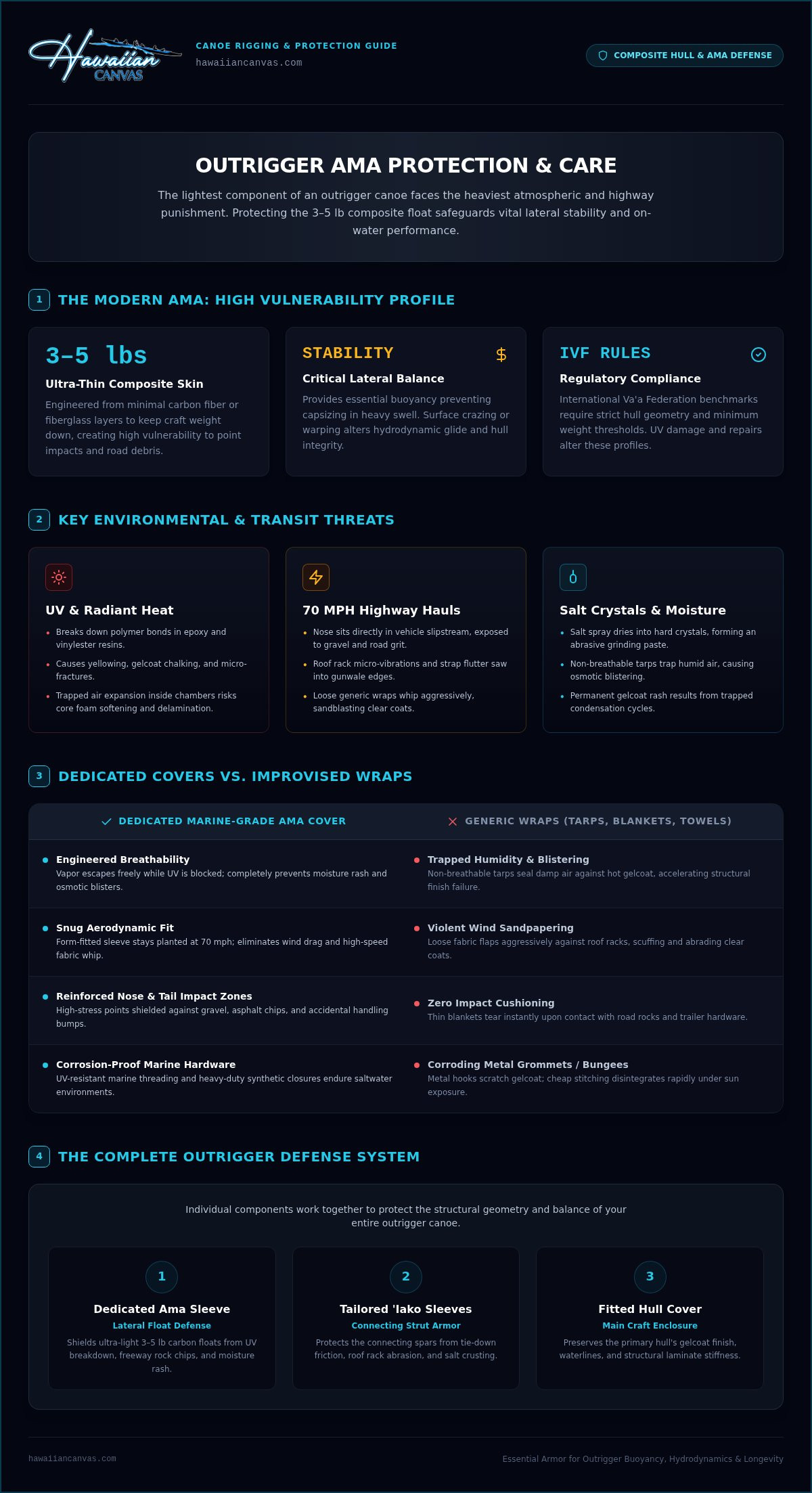
Modern composite amas rely on ultra-thin carbon fiber or fiberglass skins to keep overall craft weight minimal. While rigid on the water, these hollow shells possess little resistance to blunt point impacts. A dropped wrench, an overtightened tie-down strap, or flying gravel can easily puncture the outer skin. On land, direct solar radiation rapidly expands the air trapped inside sealed chambers, stressing seam joints and risking delamination. Unfiltered UV rays also oxidize gelcoat finishes, creating microscopic pitting that destroys hydrodynamic glide.
Dedicated Covers vs. Improvised Storage Wraps
Improvised wraps often create more problems than they solve. Hardware store tarps and non-breathable vinyl sheets trap humid air against the composite surface, fostering osmotic blistering that permanently ruins gelcoat. Wrapping an outrigger float in blankets or towels for highway transit is equally hazardous. Loose fabric catches high-speed wind, flapping furiously against the deck and scouring clear coats like fine-grit sandpaper.
Purpose-built ama covers for outrigger hulls deliver specific advantages that makeshift alternatives cannot match:
- Engineered Breathability: Marine-grade fabrics let moisture escape while blocking destructive ultraviolet wavelengths.
- Snug Aerodynamics: Form-fitting patterns stay planted on roof racks at 70 mph, eliminating high-speed wind whip and fabric fatigue.
- Targeted Protection: Reinforced nose and tail zones shield high-impact points from transport gravel and accidental bumps.
Key Threats to Unprotected Outrigger Amas
An outrigger float faces a brutal combination of mechanical friction and atmospheric punishment every week. Leaving it bare accelerates damage that compromises integrity and hydrodynamic speed. Salt spray dries into concentrated mineral crystals after a downwind session. When baked under direct sun, those hard crystals turn into an abrasive paste that grinds against the gelcoat whenever you handle the craft. Preserving clean surface geometry is essential to meet strict competitive benchmarks like the International Va'a Federation equipment standards, which require strict hull profiles and minimum weight thresholds.
Ultraviolet Radiation and Thermal Degradation
Solar radiation systematically destroys modern composite layups. Ultraviolet light breaks down polymer bonds within epoxy and vinylester resins, causing unsightly yellowing, resin chalking, and micro-fractures in clear coats. Dark carbon fiber weaves also absorb immense radiant heat. Surface temperatures quickly climb beyond safe limits in direct sunlight, softening lightweight structural core foams and warping thin side panels. Heavy-duty ama covers for outrigger floats block punishing rays, preserving laminate stiffness, hull shape, and long-term resale value.
Transit Hazards on Roof Racks and Trailers
Highway trailering introduces severe physical hazards that storage racks never produce. Because an ama often rides elevated on roof rack crossbars or trailer arms, its leading edge sits square in the vehicle's turbulent slipstream. Passing traffic kicks up loose gravel, coarse road grit, and asphalt chips at freeway speeds, pelting the nose of the float like a sandblaster.
Transport damage doesn't stop with flying rocks. Long road trips generate constant micro-vibrations between your rack pads and the composite hull:
- Strap Abrasion: Cam-buckle webbing vibrates in highway crosswinds, sawing into unprotected gunwale radiuses and scuffing seam lines.
- Crossbar Chafing: Road vibrations press bare composite hulls into metal bars, wearing gelcoats down to raw structural fabric.
- Point-Impact Buffering: Dense canvas absorbs direct impacts from flying gravel, stopping star cracks before they reach the core laminate.
Defending against high-speed grit and friction requires field-tested materials. Handcrafted sleeves from Hawaiian Canvas provide the rugged buffer your gear needs to survive thousands of highway miles without a scratch.
Comparing Ama Cover Styles, Materials, and Closures
Fabric performance dictates how well a protective sleeve holds up against open-road wind shear and tropical sun. Marine environments destroy cheap fabrics fast. While general paddlers focus entirely on waterproofing, seasoned watermen prioritize vapor breathability alongside water repellency. Studies on gelcoat degradation and maintenance demonstrate that trapped moisture beneath non-breathable barriers accelerates chemical breakdown, causing cosmetic chalking and deep structural blisters. Proper textiles solve this problem entirely.
Marine-Grade Canvas vs. Standard Polyester
Material construction makes or breaks longevity. Marine-grade solution-dyed acrylics lock pigments directly inside liquid acrylic fibers before they are spun into yarn. The result is a textile that resists fading, mildew, and tear fatigue across several seasons of direct exposure. In contrast, standard dip-dyed polyester fabrics quickly degrade under constant solar radiation. Their fibers turn brittle, seams pull apart at highway speeds, and light rain bleeds straight through the weave.
Custom-Tailored Sleeves vs. Universal One-Size Bags
Fit determines highway stability. Universal, one-size-fits-all bags attempt to cover floats spanning seven to eighteen feet with excessive generic volume. On a roof rack, that excess slack acts like a parachute, generating turbulent aerodynamic drag, noise, and violent buffeting against crossbars. Custom-tailored sleeves match the specific length, rocker, and volume of your exact float model. To explore tailored patterns across all canoe classes, review our guide on custom outrigger canoe covers.
Closure Systems: Drawstrings, Straps, and Marine Zippers
A cover is only as dependable as its fastening hardware. Salt air, wind load, and fine launch sand punish inferior closures. Choosing the proper closure ensures effortless daily rigging and complete security during long highway hauls:
- Molded Delrin Zippers: Marine-grade #10 molded plastic zippers resist salt corrosion and won't chemically seize like metal sliders, giving you smooth operation even after sandy beach entries.
- Heavy-Duty Cinch Straps: Adjustable perimeter buckles stop the sleeve from creeping backward under dynamic airflow on freeway crossbars.
- Reinforced Stern Pockets: Heavy internal end-caps protect the delicate, tapered stern of the float against accidental drops or transport scrapes.
Selecting reliable ama covers for outrigger hulls means pairing solution-dyed woven marine canvas with saltwater-proof hardware. That combination delivers quiet transport, rapid pack-ups, and reliable protection for your craft year after year.
How to Choose and Maintain Your Outrigger Ama Cover
Choosing the right ama covers for outrigger canoes comes down to matching the cover's cut to your specific paddling discipline and transit routine. An outrigger float is not a generic tube. It features distinct rocker profiles, varying draft depths, and precise lashing mounts. Beyond pattern geometry, inspect the seam construction. Marine-grade, UV-stabilized threading and reinforced stress points prevent salt air and sunlight from rotting seams apart after a single season.
Selecting the Ideal Fit for Your Canoe Class
Different canoe classes impose vastly different physical demands on protective gear. Solo craft like OC1s and OC2s require low-profile, aerodynamic sleeves designed specifically for roof rack car-topping. Their floats measure between seven and twelve feet long and must slip cleanly through highway wind. In contrast, team OC6 amas stretch up to eighteen feet. These larger floats endure rough club yards, crowded fleet trailers, and repeated handling by multiple crews. For team setups, read our detailed resource on OC6 canoe storage covers.
Routine Care, Washing, and Salt Removal
Caring for marine canvas takes minimal effort, but consistency matters. Salt and road film should never sit permanently on heavy fabrics. Simple habits keep your gear operating smoothly season after season:
- Freshwater Rinses: Hose down the fabric after ocean sessions to flush away corrosive salt crystals and grit from zippers.
- Spot Cleaning: Scrub stubborn highway grime with a soft-bristle deck brush and mild castile soap. Avoid harsh chemical detergents and bleach.
- Thorough Drying: Always air-dry the cover and composite float completely before sealing them away in seasonal storage. Trapping moisture inside invites mold and surface mildew.
- No Machine Washers: Never throw heavy canvas into a home washing machine. Mechanical agitators tear protective coatings and stress stitched structural seams.
When you need proven protection built for real ocean conditions, don't settle for universal bags that fall apart in the sun. Visit Hawaiian Canvas to outfit your canoe with a heavy-duty cover built by watermen who understand the sport.
Comprehensive Canoe Protection: Integrating the Full Rig
A high-performance canoe is a synchronized system, not a collection of isolated parts. Seasoned watermen know that protecting a main hull while leaving connecting spars and floats bare invites avoidable wear. True equipment longevity demands guarding every surface that contributes to lateral trim and forward drive. Dedicated ama covers for outrigger craft perform best when integrated into a unified defense system alongside full hull bags, rudder caps, and matching spar protection.
Shielding the Rigging: Why Iako Sleeves Matter
Connecting spars endure severe vibration and friction long before they ever reach the shoreline. Tossed loosely into a truck bed or sliding across a roof rack, bare anodized aluminum or curved wood iakos quickly gouge unprotected cockpits and crack delicate gunwales. Padded iako sleeves cushion these critical structural arches against metal-on-metal impact and abrasive transit chatter. Coordinated rigging sleeves also eliminate sorting clutter, speeding up your rigging and derigging process during chaotic regatta launches.
Handcrafted Marine Canvas Built for Ocean Athletes
Gear built for ocean athletes must handle real-world punishment. Cheap universal covers rely on lightweight threads and thin exterior coatings that rapidly break down under relentless coastal sun and salt spray. In contrast, heavy-duty marine canvas construction provides targeted reinforcements along high-friction contact points, shielding vulnerable bow tips and stern tails from concrete scrape and rack wear.
A complete transport setup brings every piece together seamlessly:
- Dedicated Ama Covers: Shield fragile composite outrigger floats against direct UV exposure, rock chips, and radiant heat expansion.
- Padded Iako Sleeves: Prevent bent aluminum tubes, gouged cockpit rails, and noisy transit vibration inside transport vehicles.
- Specialized Accessories: Durable rudder caps defend thin steering blades from trailer impacts, while a rugged Sunbrella paddle bag preserves costly carbon blades.
When you spend hours training on open water, your protective equipment should work just as hard as you do. Invest in dependable, handcrafted Ama Covers engineered for lifetime performance and built by craftsmen who live the sport.
Safeguard Your Rig for the Long Haul
Your outrigger float provides essential lateral balance on open water, but its ultra-light composite shell remains vulnerable on land. Relentless solar heat weakens epoxy matrices, while highway grit chips smooth gelcoat down to bare carbon cloth. Investing in tailored ama covers for outrigger setups turns potential road stress into quiet, dependable protection. Breathable marine canvas prevents blistering moisture traps beneath the fabric, while a snug fit eliminates destructive wind whip across roof rack crossbars.
Don't leave the most delicate part of your canoe unprotected. Constructed from heavy-duty UV-resistant marine canvas, our gear is handcrafted by dedicated watermen to endure punishing coastal sun and open-road trailering. Protect your outrigger float with handcrafted Ama Covers and keep your entire craft race-ready for every swell ahead.
Frequently Asked Questions
Can I leave my outrigger ama in its cover while it is still wet from paddling?
No, you should avoid sealing a wet ama inside any cover for extended periods. While breathable marine-grade canvas allows vapor to escape, leaving standing ocean saltwater trapped against composite gelcoat creates an environment ripe for osmotic blistering and mildew. Rinse your ama with clean freshwater after paddle sessions, towel off excessive moisture, and allow both the craft and sleeve to dry thoroughly before storing them long-term.
What is the difference between an OC1 ama cover and an OC6 ama cover?
The main differences lie in physical dimensions, closure mechanisms, and transport reinforcement. An OC1 ama measures roughly seven to nine feet long and uses a streamlined, form-fitting cut designed for rooftop highway transit. An OC6 ama spans fourteen to eighteen feet and weighs significantly more. OC6 covers demand heavier marine textiles, reinforced lashing cutouts, and rugged ends to withstand rigorous handling in club storage yards and on multi-canoe trailers.
Will an ama cover prevent my outrigger float from blowing off my roof rack?
No, an ama cover does not secure your craft to the vehicle. Dedicated ama covers for outrigger hulls protect the composite finish from road grit and wind shear, but you still need heavy-duty tie-down straps anchored directly to your rack crossbars. The cover does, however, eliminate loose flapping fabric and aerodynamic flutter. This keeps air flowing smoothly over the float, reducing wind drag and turbulence that can strain your mounting straps.
How do I measure my outrigger ama to ensure a proper cover fit?
Measure the total length from bow tip to stern tail along the centerline deck, then record the widest circumference. Run a flexible measuring tape from the forward nose point to the trailing stern edge, following the deck curvature. Next, measure the girth around the thickest section, noting the distance between the two iako mounting points. Handcrafted covers rely on these exact dimensions to ensure a snug, aerodynamic profile without excess material bunching up.
Do I need an ama cover if my outrigger canoe is kept inside a garage?
Yes, indoor storage still exposes delicate composite floats to accidental impacts and ambient dust. Amas stored on garage racks or hanging slings are vulnerable to falling tools, moving bicycles, and scraping against rough wall framing. A padded marine canvas sleeve acts as a durable physical cushion against localized pressure dings. If your garage features windows that let in afternoon sun, the cover also blocks indirect UV rays from yellowing exposed resin.
What fabric provides the best UV protection for composite outrigger gear?
Solution-dyed marine acrylic canvas provides the highest level of UV protection and environmental durability. Because color pigments permeate the core fibers before yarn spinning, solution-dyed acrylic blocks radiant ultraviolet degradation without fading or rotting over years of sun exposure. High-quality ama covers for outrigger floats also use marine polyester blends engineered for vapor breathability. This woven barrier shields sensitive carbon fiber from extreme thermal absorption while preventing condensation buildup against delicate gelcoat finishes.