

Outrigger Canoe Rudder Caps: Complete Buyer's Guide 2026
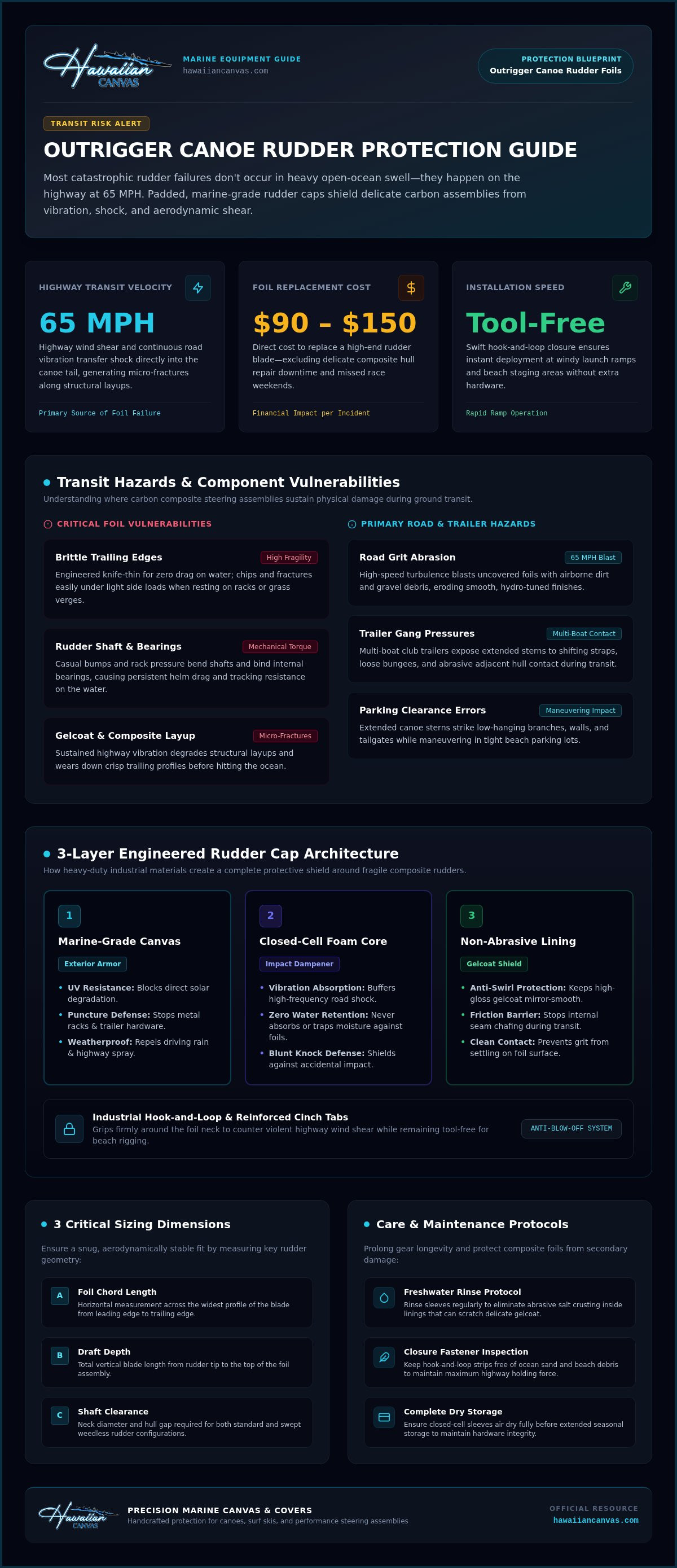
Most catastrophic rudder failures don't happen in heavy open-ocean swell; they happen on the highway at sixty-five miles per hour. High-speed transit vibration, loose tie-downs, and road debris place punishing stress on delicate steering assemblies. If you rely on flimsy sleeves or haul your craft unprotected, you risk bent shafts and chipped trailing edges before your hull ever touches the water. That is why purpose-built outrigger canoe rudder caps have become essential hardware for paddlers who demand reliable protection on the road.
You already know that keeping your foil true is the difference between effortless tracking and fighting helm drag on every single stroke. In this guide, you'll discover how to choose a heavy-duty, marine-grade rudder cap that withstands relentless highway winds, blocks UV degradation, and installs tool-free at the boat ramp. We'll examine reinforced fabric builds, secure fastening methods, and critical sizing factors so you can protect your investment with quiet confidence.
Key Takeaways
- Learn how heavy-duty outrigger canoe rudder caps prevent costly gelcoat micro-fractures and trailing edge chipping during highway transit.
- Discover the critical retention and closure features that prevent sleeves from slipping off under severe highway wind shear.
- Compare marine-grade canvas, neoprene, and foam to determine which fabric provides the best defense against UV degradation and physical impact.
- Master precise measurement techniques for foil chord length, draft depth, and shaft clearance across standard and weedless designs.
- Establish essential freshwater care protocols to stop abrasive salt crusting and prolong the life of your protective craft accessories.
Why Outrigger Canoe Rudder Caps Are Essential Protective Gear
Precision steering foils are hydrodynamic assets on the water, but they become distinct liabilities on land. Modern outrigger canoe rudder caps function as heavy-duty protective sleeves designed specifically to shield vulnerable foil assemblies between sessions. While an outrigger boat is built to conquer open ocean swells, its thin composite steering gear remains exceptionally fragile during transport, staging, and boatyard storage. Sustained highway vibration transfers road shock directly into the canoe tail, generating micro-fractures along structural layups and wearing down crisp trailing profiles.
To see how a precision steering system is assembled and how critical every component is to hull performance, watch this walkthrough:
High-end replacement rudders generally range between $90 and $150, but the hidden cost lies in wasted race weekends and delicate composite repairs. Installing purpose-built outrigger canoe rudder caps stops that damage before it starts. Prevention is simple insurance; precision tooling deserves real protection.
Vulnerability of Modern Carbon Composite Rudders
Modern blades feature knife-thin trailing edges engineered for zero drag. That efficiency has a tradeoff: brittle carbon edges chip easily under light side loads. When hulls rest against storage racks or grass verges, casual bumps transfer mechanical torque through the assembly. This pressure bends rudder shafts, binds internal bearings, and creates catastrophic helm friction during subsequent paddles.
Transit Hazards on Roof Racks and Fleet Trailers
Highway driving introduces severe environmental hazards to unprotected foils:
- Road Grit Abrasion: High-speed turbulence blasts uncovered blades with airborne debris, eroding smooth gelcoat finishes.
- Trailer Gang Pressures: Multi-boat club trailers expose sterns to shifting straps, loose bungees, and adjacent hull contact.
- Parking Clearance Errors: Extended sterns easily strike low-hanging branches, walls, or tailgates while maneuvering in crowded beach lots.
A padded cap forms an impenetrable exterior barrier that isolates your steering system from harsh road abuse.
Key Features to Evaluate in a Heavy-Duty Rudder Cap
Not all covers protect equally. A loose-fitting sleeve might keep dust off in the garage, but it fails under highway stress. Purpose-built outrigger canoe rudder caps must endure relentless friction, high-pressure wind loads, and corrosive coastal air. Whether you compete in rigorous ocean circuits organized by the Oahu Hawaiian Canoe Racing Association or paddle local downwind runs, your protective gear requires deliberate, industrial-grade construction.
Marine-Grade Exterior Shells vs. Basic Fabrics
Flimsy stretch polyester degrades rapidly under direct sun. Quality caps utilize heavy-duty marine canvas engineered for long-term UV resistance. This dense exterior armor stops punctures from jagged trailer hardware and metal storage racks. Premium woven synthetics also repel driving rain and highway spray, preventing abrasive road grit from settling onto the foil.
Shock-Absorbing Interior Padding Architecture
Exterior toughness means nothing without internal cushioning. Heavy-duty caps employ closed-cell foam padding to absorb sharp road vibrations and blunt trailer knocks. Unlike standard open-cell foam, closed-cell construction never absorbs water or holds trapped moisture against composite surfaces. Inside, a non-abrasive lining protects high-gloss gelcoats from swirl marks and prevents internal seam friction under continuous transport vibration.
Secure Fastening and Retention Systems
Highway wind shear will rip generic elastic sleeves straight off a canoe tail. Reliable outrigger canoe rudder caps depend on heavy-duty hook-and-loop closures and reinforced cinch tabs that grip firmly around the foil neck. These industrial fasteners stay put through violent highway buffeting while still offering swift, tool-free release when rigging on windy beaches. Choosing reliable, handcrafted rudder caps guarantees your steering foil stays shielded through every mile of transit.
Comparing Rudder Cap Materials: Canvas, Neoprene, and Foam
Material selection dictates whether your protective gear lasts a single season or a decade of hard ocean service. Cheap nylon sleeves and generic stretchy fabrics claim water resistance, but unrelenting sun and brine quickly expose their flaws. Salt crystals cut into unbonded fibers, while ultraviolet rays rot standard threads from the inside out. Experienced watermen pair heavy-duty outrigger canoe rudder caps with matching protection like ama covers for outrigger gear to establish total hull defense across every transition.
Heavy-Duty Marine Canvas: Maximum Durability and UV Resistance
Marine-grade synthetic canvas remains the gold standard for harsh coastal environments. Its tight, solution-dyed weave repels abrasion, resists punctures from metal trailer bunks, and refuses to fade under punishing sun. High-grade canvas also breathes naturally. It allows ambient airflow around the blade, preventing trapped moisture and humidity that cause gelcoat blistering during long storage stretches on open club racks.
Neoprene Sleeves: Flexibility with Inherent Limitations
Neoprene covers offer initial elasticity and cushion, but they break down under continuous outdoor exposure. Direct ultraviolet radiation degrades raw neoprene quickly, leading to dry-rot, surface cracking, and lost elasticity. More critically, neoprene holds water like a sponge. When saturated fabric sits pressed against stainless steel or titanium rudder shafts, it creates a stagnant, salty microclimate that accelerates pitting. Road winds stretch out the rubber over time, leaving the sleeve loose and prone to blowing off in transit.
Thread Integrity and Marine Stitching Specifications
A protective cover is only as dependable as the seams holding it together. Standard sewing thread breaks down in months under intense marine conditions:
- Bonded Marine Polyester: High-tensile synthetic thread resists chemical rot, saltwater breakdown, and direct solar exposure.
- Reinforced Stress Points: Strategic multi-needle bar-tacking strengthens high-load areas around the razor-sharp blade tip and trailing edge.
- Lockstitched Seams: Industrial, handcrafted lockstitching prevents unraveling even if an outer stitch suffers friction on a rough gear rack.
Investing in handcrafted outrigger canoe rudder caps built with marine-grade materials ensures your steering system remains intact for years of open-ocean paddling.
Sizing and Compatibility: Matching Caps to Your Canoe or Surf Ski
A loose cover flaps at highway speeds, while an undersized cap pinches the foil root and risks tearing. Steering designs differ significantly across OC1, OC2, V1, and downwind surf ski platforms. Securing exact dimensions ensures your protective gear shields the delicate composite without shifting or binding against the rudder housing. Handcrafted outrigger canoe rudder caps must match your specific steering geometry to deliver flawless transit security.
How to Accurately Measure Your Rudder Assembly
Precision sizing requires three critical measurements taken directly from the unmounted or mounted blade:
- Blade Depth: Measure the total vertical span from the top foil root down to the tip along the leading edge.
- Maximum Chord: Determine the widest horizontal distance from the leading edge directly across to the trailing edge.
- Shaft Collar Clearance: Check the clearance around the rudder post and steering cables to ensure the cap seats flush against the hull bottom.
Accommodating Surf, Weedless, and Sprint Profiles
Foil templates vary dramatically based on paddling conditions. Weedless rudders feature extreme sweepback angles, requiring extended pocket depth along the lower rake to avoid binding. Downwind surf rudders showcase wider chords and deeper vertical surface areas to maximize steerage in heavy following seas. Sprint foils remain compact and narrow. Quality outrigger canoe rudder caps provide sufficient internal volume for swept designs while maintaining a snug, tailored grip that prevents highway flutter.
Integrated Transport Protection for the Entire Hull
Protecting the stern is only one element of trailering defense. Complete craft care means guarding every high-wear component against road hazards. Pairing your rudder shield with dedicated iako sleeves prevents aluminum spars from scratching neighboring boats on shared racks. Furthermore, clean tail lines allow full-length storage bags to slide smoothly over the hull without snagging exposed steering hardware. Ready to eliminate transport wear on your steering system? Order custom rudder caps built specifically for your craft geometry.
Care, Maintenance, and Choosing Built-to-Last Craftsmanship
Rugged gear takes care of your canoe, provided you take care of the gear. Saltwater is relentless; left unchecked, drying brine forms sharp micro-crystals that grind through protective fabric linings and chew into composite clear coats. Integrating simple maintenance habits into your post-paddle routine keeps heavy-duty outrigger canoe rudder caps performing at their peak across countless ocean runs. A few minutes of basic care prevents abrasive grime from compromising your craft's delicate steering foil.
Salt and Grime Maintenance Routine
Maintaining marine fabrics requires consistency rather than complex tools:
- Freshwater Flushing: Rinse both interior and exterior canvas surfaces thoroughly with cool, clean tap water after every saltwater session.
- Fastener Clearing: Brush out sand, salt crust, and trail grit from hook-and-loop strips using a stiff nylon bristle brush to maintain firm retention under highway wind loads.
- Shaded Air Drying: Hang your gear in a shaded, well-ventilated space until completely dry before packing it into an enclosed vehicle hatch or gear locker.
Never pack damp covers into airtight plastic bins; trapped ocean humidity breeds dark mildew and weakens marine thread fibers over time.
The Advantage of Dedicated Paddler Craftsmanship
Mass-market protective sleeves are stamped out in generic factories by people who have never rigged a canoe against a forty-knot trade wind. They cut corners with lightweight stitch patterns and unreinforced seams that burst during highway hauls. Purposeful craftsmanship comes from watermen who live the sport. Artisanal marine gear focuses squarely on utility: robust bartacking at high-wear corners, thick UV-resistant thread, and dense impact barriers that stand up to relentless tropical sun, road grime, and salt spray.
Securing Reliable Protection for Your Craft
Take an honest look at your current trailering routine before the race calendar kicks into gear. Are you relying on faded neoprene sleeves, frayed towels, or exposed carbon edges on long highway runs? Upgrading your kit with heavy-duty outrigger canoe rudder caps shields fragile trailing foils from expensive yard repairs and ruined training days. Discover handcrafted marine protection built by ocean paddlers at Hawaiian Canvas.
Shield Your Steering Foils for the Long Haul
Your canoe is engineered for razor-sharp steering responsiveness, but maintaining that hydrodynamic edge requires serious transit defense. Unprotected foils take relentless abuse on the road. A bent shaft or chipped trailing edge costs far more than replacement parts; it steals hard-earned water time. Choosing heavy-duty marine canvas, closed-cell cushioning, and wind-tested cinch closures ensures your foil stays true through thousands of highway miles.
Quality outrigger canoe rudder caps deliver dependable insurance against road grit, rack friction, and harsh sun degradation. Handcrafted specifically for real ocean conditions and high-speed trailering, they eliminate costly composite downtime before you ever load up for the weekend. Don't leave your steering assembly vulnerable on the highway. Protect your steering foils with Handcrafted Rudder Caps from Hawaiian Canvas and hit the water ready to race.
Frequently Asked Questions
Can I leave my outrigger canoe rudder cap on while driving on the highway?
Yes, provided the cap is purpose-built with reinforced fastening tabs designed for high wind shear. Heavy-duty outrigger canoe rudder caps are engineered specifically for trailering and roof-rack transport at freeway speeds. Stretchy, unfastened sleeves or basic elastic bands often blow off under highway turbulence. Look for industrial hook-and-loop closures that lock securely around the foil neck to prevent highway fly-aways.
Will an outrigger canoe rudder cap also fit my surf ski rudder?
Many caps fit both craft, but you must verify blade depth and chord length before assuming cross-compatibility. Surf ski rudders often feature different rake angles and shaft housings compared to standard OC1 or OC2 assemblies. If your surf ski utilizes a swept weedless foil or an oversized downwind blade, ensure the cap profile provides adequate internal depth without pinching the trailing edge.
How do I prevent salt build-up inside my rudder cap after ocean paddling?
Rinse the cap thoroughly with fresh water alongside your canoe after every ocean run. Salt residue easily crystalizes inside the lining, turning soft fabrics into abrasive sandpaper against your gelcoat. Flush the internal pocket, brush dried salt from hook-and-loop strips using a nylon brush, and let the cap air-dry completely in the shade before packing it away in your gear bag.
What is the difference between marine canvas and neoprene rudder covers?
Marine canvas provides superior exterior puncture resistance, breathability, and multi-year UV stability without holding moisture against the foil. Neoprene provides flexible initial padding, but it degrades quickly under harsh sun exposure and retains trapped saltwater against metal rudder shafts. Marine-grade canvas sheds road grime, allows air circulation to prevent gelcoat blistering, and holds its structural shape over thousands of trailered miles.
Do I need to remove my canoe rudder before installing a rudder cap?
No, quality outrigger canoe rudder caps are designed to install directly over the mounted blade while the canoe sits on racks or trailers. The open-throat pattern slides up over the foil from the bottom and secures around the rudder collar with heavy-duty closures. This allows quick, tool-free protection at crowded boat ramps without disconnecting steering cables or unseating the rudder pin.
Can a rudder cap protect my steering foil from UV sun damage during long-term storage?
Yes, heavy-duty marine canvas blocks destructive ultraviolet rays that break down epoxy resins and fade carbon fiber finishes over time. Leaving rudders exposed on outdoor club racks degrades composite layups and weakens structural integrity. A dense, UV-resistant cap acts as an impenetrable physical barrier against relentless sun exposure, keeping your steering foil race-ready through seasons of outdoor storage.