

Custom Padding for Canoe Seats: How to Choose the Right Fit
What if the most comfortable canoe seat isn’t the one with the thickest padding? If your seat starts to feel hard on a longer outing, adding a cushion may seem like the obvious fix. But custom padding for canoe seats works best when it fits the seat and supports your paddling position without shifting, trapping excess moisture, or getting in the way of your stroke.
Start with a few practical checks. Measure the seat, note where pressure builds, and consider how the seat’s height affects your balance and posture. Then compare padding materials and attachment options with the conditions you paddle in. This guide explains how to assess fit, comfort, and on-water needs so you can make a considered choice instead of assuming every seat or pad is alike. A secure, well-matched setup matters more than simply adding cushion.
Key Takeaways
- Match padding to the seat’s shape, your paddling position, and the length of your outings.
- Measure the usable seat surface and note its shape before comparing custom padding for canoe seats.
- Compare profile, material details, and attachment method. Extra thickness isn’t automatically a better fit.
- Before a long paddle, check for shifting, pressure points, and anything that interferes with your stroke.
- Hawaiian Canvas offers a padded canoe seat with bottle holder. Confirm its dimensions and fit for your setup before choosing.
Custom Canoe Seat Padding: Start With Your Seat and Paddling Position
A seat that feels fine at the launch can become a hard contact point after hours on the water. Adding cushion may help, but only if it fits the seat and supports the way you paddle. Begin by identifying the seat, checking its usable shape, and considering your posture and typical outing length.
First, clarify what you want to change. A removable pad adds a layer to an existing seat; replacing or modifying the seat changes its underlying support and may affect its height or structure. The phrase custom padding for canoe seats can refer to padding selected or made for a particular seat, but don’t assume a seller offers custom dimensions. Ask what fit options are available and confirm compatibility before ordering. Canoes are used by seated or kneeling paddlers, and that difference affects where support is needed.
A video review can help illustrate how an adjustable seat setup differs from a simple pad:
What Does Custom Padding Mean?
Custom-sized padding is made to specified dimensions or shaped for a particular seat. A standard pad that sits neatly on your seat may still be a good fit, but it isn’t necessarily custom. Identify whether your seat is a bench, bucket, woven, or another style. Its shape and support points determine which area the pad needs to cover and whether it can sit securely.
Keep the scope clear. A removable cushion is a separate accessory, not a rebuild or alteration of the seat itself. If you need a precise fit, provide the seat type and measurements, then ask the seller to confirm dimensions and available options. Don’t rely on the word “custom” alone.
How Paddling Position Changes Comfort
Note your usual posture, where your body contacts the seat, and how long you typically paddle. Seated paddlers may want support beneath the hips, while kneeling paddlers or those who shift position may need room to move. More padding isn’t automatically better if it changes your posture or interferes with an efficient stroke.
For OC1, OC2, or V1 use, confirm seat compatibility directly with the seller before choosing. Record the craft and seat type, and explain how you paddle. That context helps you compare options against your actual setup instead of relying on a general fit claim.
How to Measure a Canoe Seat Before Choosing Custom Padding
A reliable fit check starts with the seat, not the canoe’s overall dimensions. Measure the surface where you’ll actually sit or place the pad. Then record its shape and any features that could block coverage or affect how the padding rests. These details give you a clear basis for comparing options and asking the seller to confirm compatibility.
Which Seat Measurements Should You Record?
Use a flexible tape measure and work through these steps:
- Identify the seat: Note whether it’s cane, webbing, a bench, a bucket, or another style. Include the canoe or seat model if you know it.
- Measure usable width: Measure across the actual contact surface where the padding would sit, not across the whole frame.
- Measure front-to-back depth: Record the usable area from front to back. If the seat narrows or curves, note that instead of relying on one measurement.
- Record obstacles and shape: Note raised edges, crossbars, curved sections, gaps, and other features that could affect placement or attachment.
Write down the units, such as inches or centimeters, and take a clear photo from above. A side view can show raised edges or a curved profile. Together, measurements and images communicate more than a general description like “small bench seat.”
How to Confirm Compatibility Before Ordering
Compare your measurements with the product dimensions if the seller publishes them. Check that the listed dimensions describe the padding itself and match the area you measured. Don’t assume a universal fit or apply a general tolerance: seat shapes, edges, and attachment details vary. If anything is unclear, send the seller your measurements and photos, and ask them to confirm the fit before purchase.
Fit also affects how you sit and paddle. The Better Health Channel’s guidance on preventing paddling injuries discusses risks associated with repetitive paddling motion. A seat measurement can’t guarantee comfort or prevent injury, but checking the fit helps you assess whether padding may alter your posture or interfere with movement.
For broader selection considerations, see the padded canoe seat with bottle holder buying guide. Hawaiian Canvas offers a padded canoe seat with bottle holder. If you’re considering it, review the padded canoe seat with bottle holder listing and confirm dimensions and compatibility with the seller. Custom sizing isn’t confirmed, so don’t assume it’s available.
Compare Canoe Seat Padding by Comfort, Profile, and Practical Use
Compare padding as a complete setup, not by softness alone. A pad can feel comfortable by hand yet sit poorly on a curved seat, raise you higher than expected, or shift during a stroke. Use the table to narrow your options, then verify product-specific details with the seller. A “custom” label can’t make an unsuitable shape or poor fit work.
| What to compare | What to check | Why it matters |
|---|---|---|
| Seat fit | Dimensions, shape, and coverage of the actual contact surface | Prevents overhang, gaps, or a pad that doesn’t sit securely |
| Profile | Pad thickness and how much it raises your seating position | Added height can change posture, stability, and contact with the seat |
| Materials | Stated padding and cover materials, plus care guidance | Helps you assess comfort, cleaning, drying, and exposure to sun and water |
| Attachment | How the pad is secured and whether it can be removed | A secure fit reduces movement; removability may make drying and cleaning easier |
What Padding Profile Suits Your Seat and Posture?
A low-profile option adds less height and may preserve your familiar seating position. A thicker pad may offer more cushioning, but it can also change how you reach, balance, and brace against the seat. Neither profile is automatically right. Consider your posture and contact points, and check whether added height affects stability or your stroke. Test unfamiliar padding on land first so you can assess fit and movement before paddling.
Which Material and Attachment Details Matter?
Ask for the actual material details rather than judging a pad by appearance. Confirm what the padding and cover are made from, and ask how the product handles water exposure, drying, sun, and routine cleaning. These properties vary, so don’t assume a material is water-resistant or quick-drying unless the seller confirms it.
Check the attachment method, too. Find out whether the pad straps, ties, grips, or otherwise secures to the seat, and whether you can remove it for drying or cleaning. Fit and attachment work together: even suitable materials won’t help if the pad shifts under you. For longer sessions, use the canoe seat pads for long-distance paddling guide to compare comfort and fit considerations.
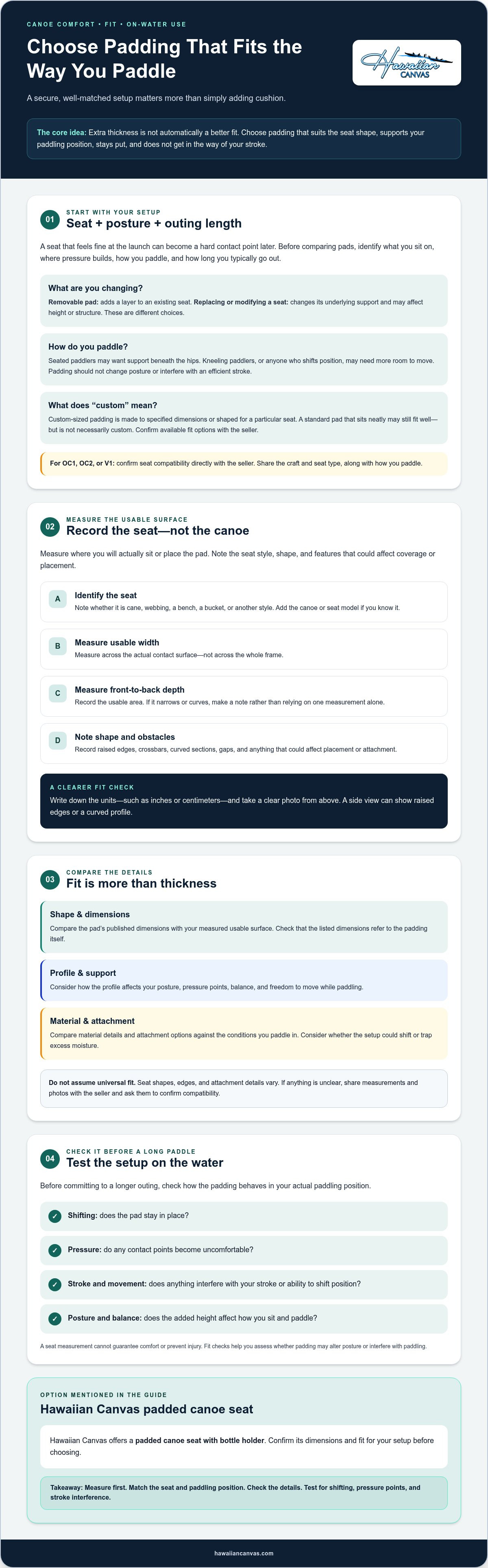
How to Choose and Test Custom Padding Before a Long Paddle
A fit check on land and a short trial on the water can reveal problems before they become distractions on a longer outing. Follow the product’s instructions and assess the whole setup: fit, fastening, posture, and how the padding feels after use. This staged test is more useful than judging comfort by touch alone.
A Simple Fit Test Before Heading Out
Place the padding on the seat it’s intended for. Check that it covers the usable contact area without overhanging in a way that catches, blocks movement, or interferes with getting in and out. Secure it only as the maker directs. If the attachment method is unclear, ask the seller before use rather than improvising a fix.
Next, sit in your usual paddling position. Check whether the pad stays put as you shift, whether your posture feels natural, and whether your reach and normal paddle stroke remain comfortable. Notice changes in balance or contact with the seat, especially if the padding raises your position. If the setup passes these checks, try it during a short session before relying on it for a longer paddle.
What to Reassess After Your First Outing
Pay attention to when and where discomfort appears. A note such as “pressure under the left hip after a short stretch” gives you more to work with than “not comfortable.” Also check whether the pad moved, bunched, or altered your position while paddling. A short trial helps you spot these issues in manageable conditions.
Before adjusting or modifying anything, compare your observations with the product’s fitting and care instructions. Follow the maker’s guidance for cleaning and drying; don’t assume every material should be maintained the same way. If the pad shifts or a strap loosens, stop and reassess its fit and attachment rather than continuing with an unstable setup.
- Verify: The padding sits on the intended seat and fits the usable area.
- Inspect: Attachments are positioned and secured as instructed.
- Test: Posture, stability, reach, and normal paddling movement feel workable.
- Evaluate: After a short session, note movement, pressure points, and any change in seating position.
For a practical option to consider, explore Hawaiian Canvas padded canoe seating. The company offers a padded canoe seat with bottle holder, but custom sizing and specific fit details aren’t confirmed. Check the available product information and confirm dimensions and compatibility with the seller before choosing it for your setup.
Choose a Canoe Seat Padding Option That Fits Your Setup
A sound choice comes down to fit, not a label. Match the padding to your seat type and usable dimensions, compare the stated materials and attachment details, then test the setup before relying on it for a long paddle. If details are missing, pause and confirm them with the seller instead of guessing. That’s especially important if you’re looking for custom padding for canoe seats, since custom sizing and customization options aren’t confirmed for every product.
When a Padded Canoe Seat With Bottle Holder May Suit Your Needs
Hawaiian Canvas offers a padded canoe seat with bottle holder. That describes the confirmed product category and feature, not a guarantee that it will fit a particular canoe or that its dimensions can be customized. Compare the product’s available details with your seat measurements and paddling setup. Before ordering, ask the seller to confirm the dimensions, padding construction, attachment method, compatible seat or canoe types, and current product details.
A careful fit check helps you decide whether the seat suits your needs without assuming unverified specifications. If you paddle in a different position or use a specialized canoe setup, include that information in your fit questions.
Your Final Pre-Purchase Checklist
Have the key details ready before contacting the seller. A clear description and photo can make compatibility questions easier to answer.
- Seat: Record its type and the usable surface where the padding will sit.
- Dimensions: Provide width and front-to-back depth, with units noted.
- Photo: Take a clear image that shows the seat shape and any edges or obstructions.
- Product details: Confirm materials, padding construction, attachment, compatibility, and current availability.
- Fit test: Ask how to check placement and follow the product’s instructions before a longer outing.
For another step in your research, read the padded canoe seat buying guide. Review the available product information, then ask Hawaiian Canvas any remaining fit questions before deciding. A measured, confirmed choice is more dependable than relying on a product label alone.
Make Your Next Seat Choice With Confidence
Comfort starts with a match, not extra thickness. Measure the seat’s usable surface, note its shape, and compare padding profile, materials, and attachment details with the way you paddle. Before committing to custom padding for canoe seats, confirm dimensions and compatibility with the seller, then test the setup on land and during a short outing.
Hawaiian Canvas LLC makes handcrafted paddling gear using heavy-duty, UV-resistant materials, designed for real ocean conditions and shipped worldwide. Its confirmed seating option is a padded canoe seat with bottle holder. Custom sizing and specific fit details aren’t confirmed, so review the available product information before deciding whether it suits your canoe.
Explore Hawaiian Canvas LLC padded canoe seating and confirm the fit for your setup. With careful measurements and a practical fit check, you can choose your next seat setup with greater confidence and focus on the water ahead.
Frequently Asked Questions
How do I measure a canoe seat for custom padding?
Measure the usable surface where the padding will sit, not the whole seat frame or canoe. Record the width and front-to-back depth, and note curves, raised edges, crossbars, or other features that could affect placement. Identify the seat type, such as a bench, cane, or webbed seat. Include units and take a clear photo to help the seller check compatibility with your custom padding for canoe seats.
Can I add padding to any canoe seat?
Not every pad will suit every canoe seat. Shape, usable surface area, edges, and attachment method all affect fit. Before buying, compare the seat with the product’s stated dimensions and ask the seller to confirm compatibility if anything is unclear. Once fitted, check that the pad doesn’t shift, obstruct movement, or change your paddling position in a way that feels unstable.
What type of padding is best for a canoe seat?
The best option depends on your seat, paddling position, outing length, and the conditions you encounter. Compare the pad’s profile, stated padding and cover materials, and attachment method. Ask how the material handles water, sun exposure, cleaning, and drying rather than judging by appearance. A well-matched pad that stays in place may be more practical than a thicker option that changes your posture or doesn’t fit the seat.
How thick should a canoe seat pad be?
There isn’t one thickness that suits every canoe seat or paddler. A thicker pad may add cushioning, but it can also raise your seating position and affect posture, stability, or contact with the seat. Consider how the added height feels in your usual paddling position. Test the pad on land first, then try it during a short session and assess comfort and movement before taking it on a longer outing.
Will a canoe seat pad stay in place while paddling?
That depends on the fit, seat surface, and pad attachment design. Check the maker’s instructions for positioning and securing it, and ask the seller if the attachment method or compatibility is unclear. Before heading out, sit and shift as you normally would, then check for movement. Try the setup during a short session and inspect it afterward. Don’t rely on an unsecured pad if it interferes with paddling.
Can custom canoe seat padding get wet?
It may get wet during paddling, but how it responds depends on its materials and construction. Don’t assume a pad is waterproof, water-resistant, or quick-drying based on its appearance. Ask the seller what the padding and cover are made from, how to clean them, and what care is recommended after water exposure. Follow the product’s instructions for drying and maintenance, since guidance can differ between materials.
Does Hawaiian Canvas offer custom-sized canoe seat padding?
Hawaiian Canvas offers a padded canoe seat with bottle holder, but available information doesn’t confirm custom dimensions or customization options. Before ordering, share your seat type, usable measurements, and a clear photo, then ask the seller to verify fit, padding construction, attachment details, and compatibility with your canoe. Confirm current product details as well. Don’t assume the seat can be made to custom dimensions unless the seller confirms that option.