

Hawaiian Canvas Canoe Covers Review: Professional Protection for 2026
A high-performance canoe is an investment in speed and tradition, but it only takes one season of harsh UV exposure to turn a pristine gelcoat into a chalky, oxidized liability. Your craft deserves more than a generic tarp that flaps in the wind and tears at the first sign of highway speeds. Most dedicated paddlers understand that true protection isn't just a storage accessory. It's a vital component of performance maintenance. You need gear that stands up to the salt and sun without fail, year after year.
This Hawaiian Canvas canoe covers review provides an expert evaluation of why these handcrafted, UV-resistant shields remain the industry benchmark for 2026. We've looked at the rugged dependability of their Sunbrella construction and the precision of their custom tailoring. You'll learn how these covers eliminate transport scratches and prevent the structural degradation caused by the elements. We will examine the technical advantages of specialized protection for OC1, OC2, V1, and surf skis, proving that the right cover is the most important piece of gear you'll own.
Key Takeaways
- Understand why marine-grade Sunbrella is the only material capable of stopping gelcoat oxidation and carbon fiber degradation.
- Discover how precision tailoring for OC1 and V1 hulls prevents the wind-flap damage common during high-speed transport.
- This Hawaiian Canvas canoe covers review evaluates the industrial-grade stitching and reinforced stress points essential for long-term durability.
- Learn professional maintenance strategies for managing saltwater residue and keeping your technical hardware functioning smoothly.
- Evaluate the cost-per-year benefits of investing in handcrafted protection versus the high price of professional hull repairs.
Why Your Canoe Needs More To Than a Generic Cover
Protection is a requirement for performance. High-performance composite hulls are vulnerable to the relentless assault of UV radiation, which breaks down the resin bonds in carbon fiber and fiberglass over time. This isn't just an aesthetic issue; it's a structural one. A "sock" or a generic tarp might block some light, but it fails in the harsh salt-air environments where these crafts live. Without a barrier designed for the elements, your investment begins to degrade the moment it leaves the water.
Marine-grade materials are the only defense against saltwater environments. Standard canvas is a liability because it absorbs moisture and traps salt against the hull. This leads to mildew growth and rapid hardware corrosion. Hawaiian Canvas uses heavy-duty, UV-resistant Sunbrella engineered specifically for the marine environment. This focus on rugged dependability ensures the cover lasts as long as the craft it protects. It's a specialized solution that prioritizes utility over mass-market trends.
Consider the complex geometry of traditional and modern outrigger canoes. Their unique hull shapes and lateral support structures require a specialized fit that generic boat covers cannot provide. In this Hawaiian Canvas canoe covers review, we examine how precision tailoring maintains resale value by preventing the cumulative damage of improper storage. A well-protected hull stays stiff, smooth, and fast, ensuring you get the maximum return if you ever decide to upgrade your craft.
The Threat of Gelcoat Oxidation
Sunlight is a constant chemical assault. UV radiation triggers a reaction in the gelcoat, leading to "chalking" and brittleness. Many low-quality bags trap heat, creating a greenhouse effect that can lead to delamination. This is where the outer skin separates from the core material. Hawaiian Canvas designs prioritize thermal regulation. Their covers breathe, allowing heat to escape while keeping the UV out. It's a master craftsman's approach to long-term hull health.
Transport Hazards: Dings and Scratches
The road is the most dangerous place for your canoe. Road debris at highway speeds acts like sandpaper on an unprotected finish. If a cover doesn't fit perfectly, it flaps in the wind. This "cover flap" creates friction that buffs away the finish or creates deep scratches in the gelcoat. A custom-fitted sleeve from Hawaiian Canvas eliminates this movement. It secures the hull tightly, ensuring the only thing touching your canoe is soft, protective fabric, even during long-distance hauls.
Technical Review: Materials, Stitching, and UV Resistance
Engineering a cover for the marine environment requires a deep understanding of textile science and structural reinforcement. A cover is only as strong as its weakest seam, and in the salt spray of the coast, those weaknesses are exposed quickly. This Hawaiian Canvas canoe covers review focuses on the industrial-grade components that separate professional gear from mass-produced accessories. When you're protecting a high-performance craft, the choice of material isn't just about color; it's about the chemical stability of the fabric under constant solar bombardment.
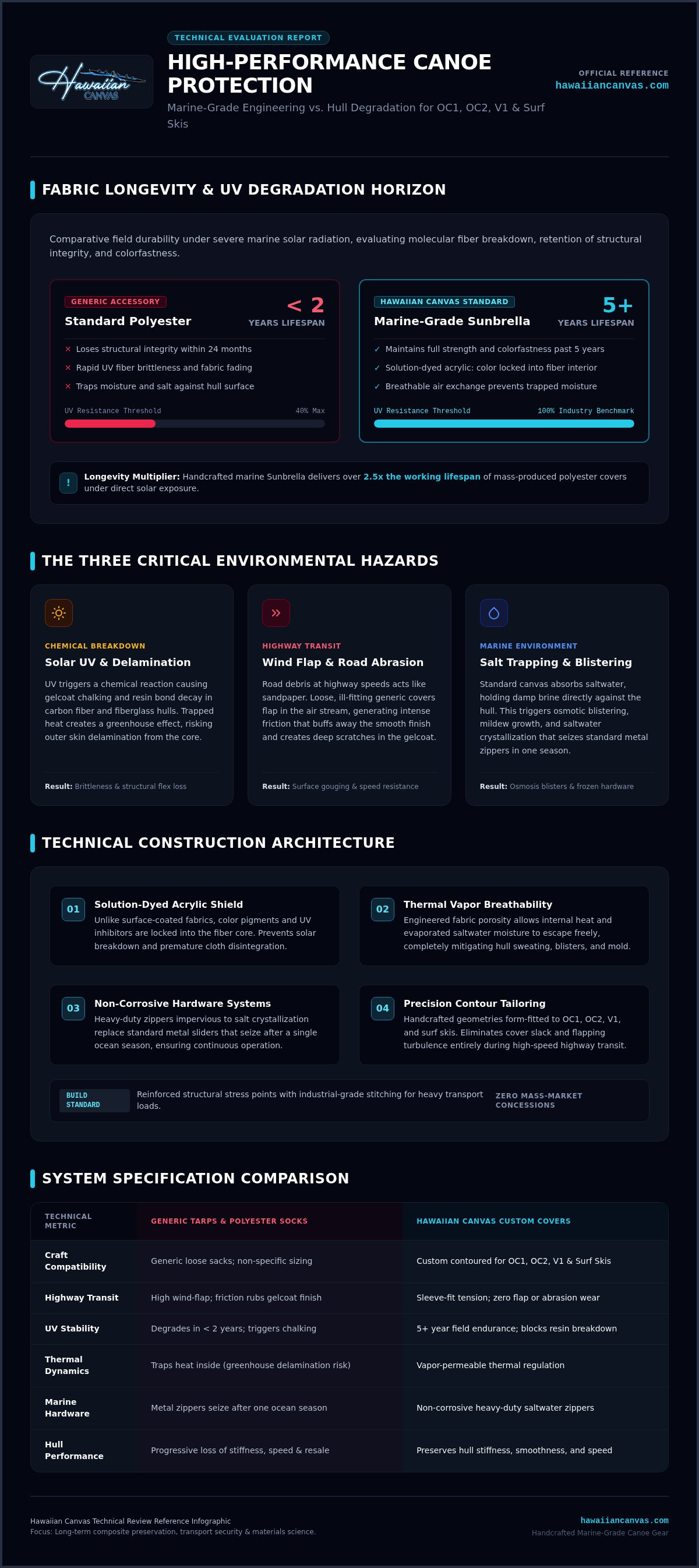
Sunbrella is the industry standard for a reason. Unlike cheap polyester "socks" that claim to be waterproof, Sunbrella is a solution-dyed acrylic. This means the color is locked into the fiber itself, preventing the rapid fading and brittleness common in lesser materials. Organizations like the American Canoe Association emphasize that proper equipment preservation is key to long-term paddling success, and that starts with a breathable barrier. If moisture cannot escape, you risk mold growth and hull blistering. Sunbrella provides the necessary air exchange while remaining water-repellent.
The hardware is equally critical. Hawaiian Canvas utilizes heavy-duty, non-corrosive zippers designed to withstand saltwater crystallization. Standard metal zippers seize after a single season of ocean use, but these specialized components keep functioning smoothly. You can see this attention to detail across their entire line of handcrafted OC1 and V1 covers, where every component is chosen for its ability to survive the elements.
Sunbrella vs. Standard Polyester
Standard polyester covers often lose their structural integrity within two years of high UV exposure. In contrast, marine-grade Sunbrella maintains its strength and colorfastness for over five years in the field. Marine-grade textiles must meet rigorous UV-resistance standards to ensure the fabric doesn't break down at the molecular level when exposed to direct sunlight. This longevity ensures your investment remains protected through hundreds of transport cycles and storage seasons.
Industrial-Grade Construction Techniques
A cover's durability depends on the thread that holds it together. Hawaiian Canvas uses UV-resistant, bonded polyester thread that won't rot or snap after a season in the sun. Seam failure is the primary cause of cover death, so using high-tenacity thread is a non-negotiable requirement for professional gear. These covers also feature targeted reinforcement in high-wear areas:
- Cockpit Padding: Integrated cushioning for OC1 and Surf Ski cockpits prevents pressure dings during tie-down.
- Bow and Stern Reinforcement: Double-layered fabric at the tips protects against high-impact scrapes during loading.
- Precision Fit: Hand-cutting the fabric ensures the cover follows the exact hull contours, eliminating the excess material that causes wind-flap damage.
Custom Fit Performance: OC1, V1, and Surf Ski Analysis
A custom fit is the difference between a protective sleeve and a loose bag. When you transport a craft at highway speeds, any excess fabric becomes a vibrating abrasive. This Hawaiian Canvas canoe covers review highlights the precision engineering required to eliminate that "wind-flap" effect. By tailoring the canvas to the specific lines of your hull, the cover remains silent and secure during transit. It's a technical solution for a physical problem, ensuring your finish remains pristine regardless of the distance traveled.
Managing custom measurements for worldwide orders is a core part of the manufacturing process. The team understands that a V1 in Tahiti might have different nuances than an OC1 in California. This "Master Craftsman" approach ensures your sleeve fits your specific model without unnecessary bulk. This attention to detail is supported by the BoatUS guide to protective boat covers. It notes that a snug fit is essential to prevent fabric fatigue and gelcoat wear. A precise fit also means less weight and easier storage when the cover isn't in use.
OC1 and OC2 Tailoring Excellence
Outrigger canoes present unique challenges due to their iakos and ama connections. A generic cover forces you to compromise on protection at these critical junction points. Hawaiian Canvas designs feature specialized openings and reinforcements that allow for a perfect wrap around the rigging. This ensures your hull is fully shielded while still allowing for a quick setup and breakdown at the beach. For a deeper look at these specifications, consult The Ultimate Guide to Custom Outrigger Canoe Covers. The design prioritizes utility, ensuring you spend less time wrestling with fabric and more time on the water.
The Surf Ski and V1 Advantage
Surf skis and V1 canoes require a different engineering philosophy. The slim, needle-like profile of a surf ski demands a tension-based fit to stay in place. Loose material on a narrow hull is especially prone to tearing at high speeds. These covers are cut to follow the knife-edge lines of the craft. This provides a streamlined profile that reduces aerodynamic drag on your roof rack. Protecting the steering assembly is another priority. Using specialized rudder caps prevents damage to the most fragile part of your ski during loading and transport. For the V1, the design respects the traditional craft's unique dimensions. It accommodates the hull's specific volume while providing the same industrial-grade protection found across the entire product line.
Real-World Durability: Maintenance and Long-Term Use
A professional-grade cover is a long-term investment in your craft's longevity. While Sunbrella is incredibly resilient, the salt and sand of the ocean environment will eventually take a toll if left unchecked. This Hawaiian Canvas canoe covers review emphasizes that durability is a partnership between the craftsman and the practitioner. Proper maintenance doesn't just keep the cover looking new; it ensures the industrial-grade zippers and reinforced seams don't fail when you're hauling your craft at highway speeds. Neglecting these details leads to hardware failure and fabric degradation that is entirely preventable.
Saltwater crystallization is the primary enemy of technical gear. When salt water evaporates, it leaves behind abrasive crystals that can grind down zipper teeth and weaken stitching. Simply hosing the exterior isn't enough. You must flush the zipper tracks and teeth to remove microscopic deposits. This prevents the hardware from seizing and ensures smooth operation for years. Catching small issues during a routine inspection prevents catastrophic failures during transport.
The 5-Minute Post-Paddle Routine
Efficiency is key to a sustainable maintenance habit. After every session in the salt, follow these steps to preserve your gear:
- Fresh Water Flush: Rinse the entire cover with fresh water, paying close attention to the zipper tracks and any metal hardware.
- Air Dry Only: Never put your marine-grade cover in a dryer. Hang it in a shaded, well-ventilated area to dry completely before folding or storing.
- Zipper Lubrication: Apply a dry silicone spray or specialized zipper wax to the hardware once a month. Avoid oil-based lubricants, as they attract sand and grit that will accelerate wear.
Off-Season Storage Strategy
How you store your cover when it's not on the canoe is just as important as how it's used. Avoid "ground rot" by keeping your gear off damp concrete floors or dirt. These environments attract moisture and rodents that may use the fabric for nesting material. Instead, hang the cover on a hook or store it on a dedicated shelf in a cool, dry place. If you're managing a larger inventory of gear, consult our OC6 Canoe Storage Covers: The Complete Fleet Protection Guide for professional fleet management tips.
Before any long-distance haul, perform a tension check. Look for fraying in the UV-resistant thread or thinning at the bow and stern reinforcement points. If the cover feels loose, adjust your tie-downs to eliminate fabric flap. Maintaining a tight, secure fit is the best way to ensure your cover survives the rigors of the road. Protect your gear with the same level of care you give your canoe by choosing handcrafted Hawaiian Canvas protection for your next season.
Final Verdict: Is a Hawaiian Canvas Cover Worth It?
Investing in a high-performance outrigger canoe or surf ski represents a significant financial and personal commitment. The protection you choose for that craft reflects your respect for the sport and the equipment. This Hawaiian Canvas canoe covers review concludes that while the initial price point is higher than generic mass-market alternatives, the long-term value is unmatched. Professional-grade gear is not an expense. It's an insurance policy against the inevitable degradation caused by the sun and the road.
True protection offers a level of security that "socks" and tarps cannot provide. When you secure your craft for a long-distance haul, you need to know the fabric won't fail at highway speeds. You need to know that your gelcoat is shielded from UV rays that cause permanent structural damage. Hawaiian Canvas provides this peace of mind through industrial-grade materials and handcrafted precision. It's the difference between a temporary fix and a permanent solution for equipment preservation.
Calculating the Return on Investment
The math of equipment care is simple. A single professional gelcoat repair for localized oxidation or a deep transport scratch can easily cost $500 or more. A handcrafted cover prevents these expenses from ever appearing on your balance sheet. Beyond repair costs, consider the impact on resale value. A used canoe listing that specifies the craft was "stored in a Hawaiian Canvas cover" signals to buyers that the hull is stiff, smooth, and well-maintained. This often leads to a faster sale and a higher closing price. Choosing one high-quality item that lasts for years is also more sustainable than cycling through multiple cheap, disposable covers that end up in a landfill after one season.
The Verdict for Competitive Paddlers
Serious athletes and clubs choose this gear because it handles the realities of racing logistics without compromise. When you're moving a fleet or a personal OC1 across islands or continents, you cannot afford equipment failure. The "Reliable Master Craftsman" value proposition is built on the fact that this gear is designed by practitioners who use it in the field. It's built to survive salt spray, high winds, and rough handling. This gear is for the paddler who understands that "cheap" gear is often the most expensive choice in the long run. If you demand utility and performance, Shop the 2026 Collection of Custom Canoe Covers to give your craft the protection it deserves.
Secure Your Performance for the Seasons Ahead
Protecting a high-performance canoe is about more than just aesthetics; it's about maintaining structural integrity against the relentless sun and the friction of the open road. This Hawaiian Canvas canoe covers review highlights that the combination of UV-resistant Sunbrella fabric and handcrafted precision creates a barrier generic alternatives simply can't match. You're choosing a product engineered by practitioners who understand the physical demands of the ocean environment. Every cover is handcrafted in Hawaii to ensure your gear withstands the elements without fail.
A custom fit eliminates the wind-flap that destroys finishes during transport and prevents the heat buildup that leads to delamination. With worldwide shipping available, professional-grade protection is accessible to every paddler. Investing in quality gear today prevents expensive gelcoat repairs tomorrow while maintaining the maximum resale value of your craft. It's a matter of rugged dependability for those who take their paddling seriously.
Protect Your Investment with Handcrafted Hawaiian Canvas Gear
Respect the craft and the water will reward the effort. See you at the next race.
Frequently Asked Questions
Are Hawaiian Canvas covers waterproof or water-resistant?
These covers are water-resistant and highly breathable. Genuine Sunbrella fabric is designed to shed water while allowing moisture trapped underneath to evaporate. This air exchange is critical for composite hulls. It prevents the blistering and mold growth common with non-breathable waterproof tarps. You get the protection of a rugged shield without the risk of thermal damage or surface delamination during storage.
How do I measure my OC1 or Surf Ski for a custom cover?
Measuring for a custom sleeve involves providing specific hull dimensions and your craft's model name. We maintain a database of common shapes for OC1, OC2, V1, and surf skis. If you have a unique or older model, we guide you through the measurement process to ensure a tension-based fit. This precise tailoring is a key focus of any Hawaiian Canvas canoe covers review, as it eliminates the wind-flap damage caused by generic bags.
Do you ship your canoe covers internationally?
Yes, we provide worldwide shipping for all our handcrafted gear. Whether you're paddling in Australia, Tahiti, or Europe, your order is dispatched directly from Hawaii to your location. We use reliable carriers to ensure your custom covers and accessories arrive ready for the new season. Shipping rates and delivery times vary by destination, but our reach covers the entire global paddling community.
Can I use these covers for high-speed roof rack transport?
These covers are specifically engineered for high-speed transport on roof racks. The custom fit eliminates excess material that would otherwise flap and vibrate against your gelcoat. This stability prevents the abrasive damage often seen with loose-fitting "socks" at highway speeds. We reinforce the bow and stern to handle the increased wind pressure during long-distance hauls, providing a streamlined profile that reduces drag.
What is the difference between Sunbrella and standard canvas?
Sunbrella is a solution-dyed acrylic that offers superior UV resistance compared to standard polyester or cotton canvas. The color is part of the fiber, so it won't fade or become brittle. Standard canvas often traps moisture and rots, while Sunbrella remains breathable and mildew-resistant. This Hawaiian Canvas canoe covers review confirms that industrial-grade materials are the only way to ensure long-term hull protection in the salt.
How long does a custom handcrafted cover take to manufacture?
Each cover is handcrafted in Hawaii by master craftsmen who prioritize precision over mass production. This methodical process ensures every seam and reinforcement point meets our standards for rugged dependability. While lead times vary based on seasonal demand and the complexity of your custom order, we focus on delivering gear that lasts for years. We respect the craft and the time required to make a high-quality item.
Do you offer protection for the ama and iakos separately?
Yes, we sell Ama Covers and Iako Sleeves as standalone items to provide complete fleet protection. These accessories use the same heavy-duty Sunbrella materials as our full hull covers. You can mix and match components to suit your specific storage or transport needs. Protecting these lateral structures is just as important as shielding the main hull from UV damage and transport scratches.
How do I prevent my zippers from sticking in saltwater conditions?
Regular maintenance is the best way to keep your technical hardware functioning smoothly. Flush your zippers with fresh water after every session to remove salt crystals. Once dry, apply a dry silicone spray or specialized zipper wax to the teeth. Avoid using oil-based lubricants, as they attract sand and grit that can grind down the zipper mechanism. This simple routine prevents hardware from seizing in harsh marine environments.