

V1 Canoe Covers: Protecting Your Traditional Craft
A V1 outrigger is a specialized tool of the trade, yet many owners leave their craft vulnerable to the same elements they respect on the water. Intense UV exposure and high-speed road debris can strip the life from a hull in a single season. You shouldn't have to settle for a loose, generic bag that offers little defense against sun-induced gelcoat oxidation. It's frustrating to see an artisanal craft lose its luster because of poor-fitting protection. We understand that your canoe represents both a significant investment and a deep connection to tradition.
This guide explains how specialized V1 canoe covers provide the heavy-duty, marine-grade defense your outrigger requires. We'll show you how to safeguard your hull from transport wear and the harsh realities of the sun. You'll learn about the technical advantages of solution-dyed fabrics and why a custom fit is the only way to preserve a rudderless profile over the long term. We are moving beyond basic storage to focus on professional-grade preservation that matches the quality of your canoe. By the end, you'll know exactly how to keep your craft in race-ready condition for years to come.
Key Takeaways
- Understand why the rudderless design of a V1 requires a specific fit to prevent wind drag and hull abrasion during transport.
- Learn how solution-dyed marine-grade fabrics provide superior UV resistance compared to standard polyester options.
- Discover why specialized V1 canoe covers are the most effective way to safeguard your gelcoat from oxidation and salt damage.
- Master the essential maintenance steps, including the critical rule for storing your craft to prevent mold and mildew.
- See how handcrafted, paddler-owned manufacturing ensures your protection is built for real-world ocean conditions.
Why Your V1 Canoe Requires Specialized Protection
The V1, or Va’a, represents the purest form of the Outrigger boat tradition. It is a rudderless craft. It relies entirely on the paddler's skill rather than mechanical steering systems. This simplicity makes it beautiful, but it also makes the hull surface more critical to performance. Unlike modern OC1s with internal cables and rudder assemblies, the V1 hull is a continuous, high-performance skin. Protecting that skin requires more than a simple cloth bag. High-quality V1 canoe covers are essential tools for maintaining the structural integrity of these traditional vessels.
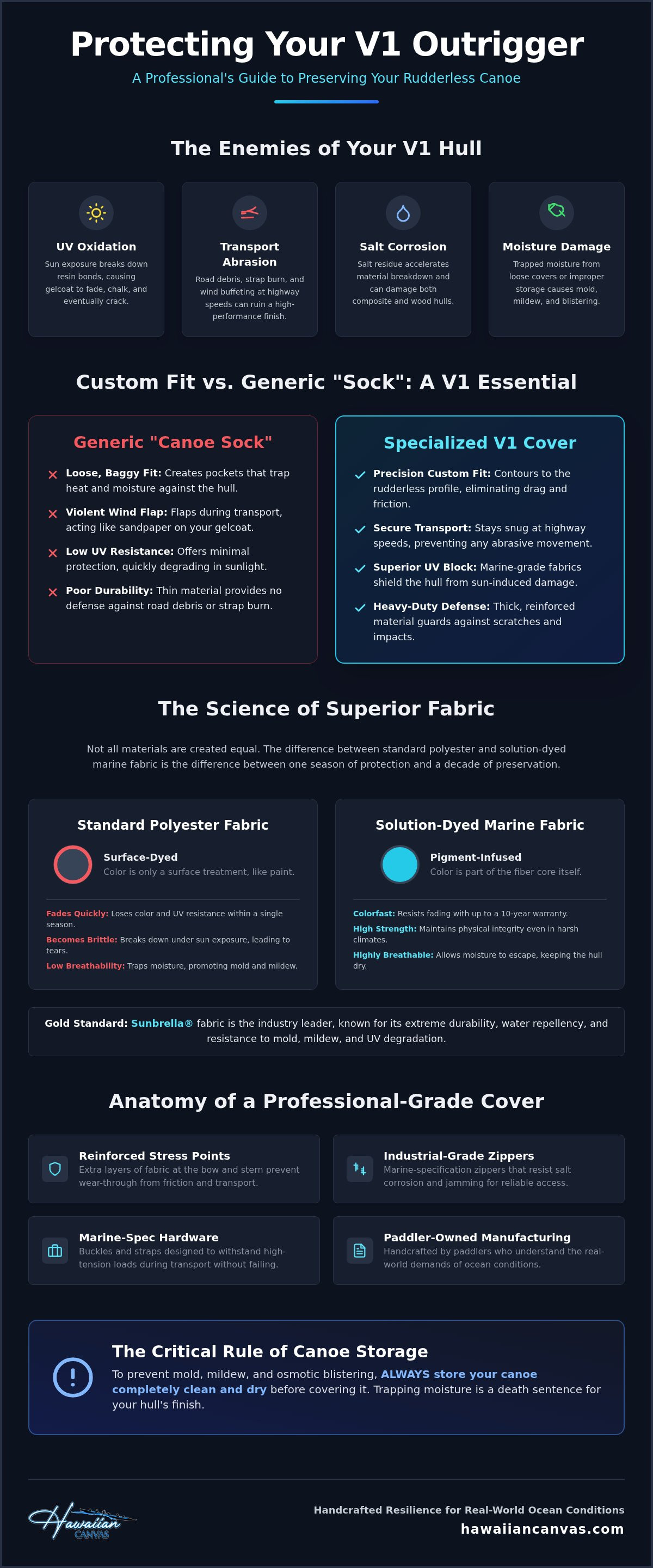
UV oxidation, salt corrosion, and transport abrasion are the primary enemies of your craft. A standard "canoe sock" might keep dust off in a garage, but it offers zero defense against the heavy-duty realities of the coast. Without specialized protection, your gelcoat will fade, chalk, and eventually crack. We focus on preserving the artisanal quality of the craft through resilience and precision. The goal is simple: long-term hull preservation and structural longevity.
The Vulnerability of Composite and Wood Hulls
Composite resins and wood veneers are sensitive to the natural elements. UV rays don't just fade the color; they break down the chemical bonds in the resin. This leads to delamination over time. The hull loses its stiffness and its speed. Temperature fluctuations also cause physical stress. A dark-colored hull left in the sun can reach temperatures high enough to warp the laminate. Because the V1 lacks a rudder, the tail section is particularly sleek. Generic covers often leave excess fabric here. This creates pockets that trap moisture and heat against the finish, leading to blistering. Specialized V1 canoe covers provide a breathable, UV-resistant barrier that prevents these failures.
Transport Hazards on the Roof Rack
Transporting your V1 exposes it to unique risks. Road debris hits the hull at highway speeds. Without a heavy-duty cover, these small impacts create micro-scratches that ruin a high-performance finish. Strap burn is another common issue. Tight tie-downs can rub against an unprotected hull, leaving permanent pressure marks or scuffs. Wind buffeting is the final threat. A loose-fitting cover will flap violently during transport. This movement creates friction that acts like sandpaper on your gelcoat. A custom-fit cover eliminates this movement. It ensures the hull stays secure and pristine from the garage to the water.
The Science of UV-Resistant Materials for V1 Sleeves
Material choice determines the lifespan of your protection. Standard polyester covers often fail within a single season. They become brittle under direct sun and eventually tear. Marine-grade canvas is different. It is engineered for the rigors of the coast. We prioritize materials that respect the cultural significance of koa canoes and the modern composites that followed them. High-performance V1 canoe covers must utilize solution-dyed acrylics to ensure long-term stability.
The solution-dyed process is a technical necessity. Unlike traditional dyeing where color sits on the surface, pigment is infused into the core of the fiber during manufacturing. This creates a fabric that is colorfast and UV-resistant to the core. It won't fade or weaken after months on a roof rack. This industrial-grade precision is what separates professional gear from mass-market accessories. It ensures the fabric maintains its physical properties even in high-heat environments.
Breathability is equally vital. Trapping moisture inside a cover is a death sentence for a hull finish. It leads to osmotic blistering and mold growth. A high-quality cover allows moisture to escape while preventing external water from soaking the craft. This balance keeps the gelcoat dry and stable. For those seeking this level of specialized protection, our handcrafted V1 and rudderless canoe covers are built to these exact specifications.
Why Sunbrella is the Gold Standard
Sunbrella is the industry leader for a reason. It carries a 10-year limited warranty against loss of color and strength. This fabric holds the Skin Cancer Foundation's seal of approval for sun protection. It is highly water-repellent but remains breathable. In humid coastal climates, this resistance to mold and mildew is essential. It provides a sense of security for paddlers who store their canoes outdoors or in damp boat houses.
Reinforcement and Hardware
- Industrial-Grade Zippers: We use marine-spec zippers that resist salt corrosion and won't jam.
- Reinforced Stress Points: The bow and stern sections require extra layers of fabric to prevent wear-through.
- Marine-Spec Buckles: Hardware must withstand high-tension loads without becoming brittle in the sun.
- Padded Ends: Internal padding protects the most delicate parts of the hull from impact during transport.
Durability is not an accident. It is the result of using reinforced stitching and heavy-duty thread that won't rot in salt air. Every component is chosen for its physical properties and resistance to wear. This methodical approach ensures your cover lasts as long as the canoe it protects.
Custom Fit vs. Generic Socks: Protecting the V1 Profile
The V1 hull is a study in streamlined efficiency. Unlike the OC1, which requires extra volume to house internal rudder assemblies and cables, the V1 features a cleaner, more tapered stern. This rudderless profile demands a specific geometry from its protection. Generic "one size fits all" covers fail because they don't account for these unique lines. They rely on stretchy materials or excess fabric that bunches up at the tail. This isn't just an aesthetic issue; it's a structural liability for your craft.
Excess fabric creates wind drag during transport. On the highway, loose material catches the air and vibrates at high frequencies. This constant flapping creates a sandpaper effect. The fabric rubs against the gelcoat thousands of times per mile, leading to dull spots and surface abrasion. V1 canoe covers must be tailored to the exact lines of the boat to eliminate this movement. A precise fit ensures the cover stays silent and stationary even at highway speeds. This level of detail preserves the high-performance finish that makes a V1 fast on the water.
Rigging points also require specialized attention. A traditional Va’a uses specific Iako and Ama attachments that differ from modern bolt-on systems. The cover must accommodate these points without leaving large gaps. A well-designed sleeve provides a secure seal around the rigging areas. This prevents salt air, road grime, and moisture from entering the cover and sitting against the hull. It's about total hull integrity from the bow to the tapered stern.
The Rudderless Tail Advantage
The stern of a V1 is its most delicate feature. It requires a sleeve that follows its tapering lines with industrial precision. Custom designs eliminate "tail flap" during transport by removing the dead space found in generic bags. This prevents the fabric from beating against the hull at 65 miles per hour. A precision-cut V1 sleeve maintains a 1:1 ratio to the hull profile for maximum aerodynamic efficiency.
Ease of Use for Solo Paddlers
Loading a 24-foot canoe alone is a test of patience. Slip-on "socks" are notoriously difficult to manage. They snag on the hull, trap air, and require constant adjustment from bow to stern. We focus on designs that simplify this process. Full-length zippers allow you to lay the cover out and place the canoe directly inside. This reduces friction during the covering process and protects the finish from unnecessary sliding. Strategic handle placement also provides better grip for safer solo loading. It's a methodical approach that respects both the craft and the practitioner's time.
Best Practices for V1 Canoe Storage and Transport
Owning a V1 requires a commitment to maintenance that matches the craft’s performance. The most critical rule is simple: never store a wet canoe in a closed cover. Trapping moisture creates a greenhouse effect. It accelerates osmotic blistering and encourages mold growth. High-quality V1 canoe covers are designed to breathe, but they cannot overcome standing water trapped against the hull. You must ensure both the canoe and the interior of the sleeve are bone-dry before long-term storage. This discipline prevents the finish from clouding and preserves the structural integrity of the composite.
Salt is a silent abrasive. It forms microscopic crystals that grind into the gelcoat whenever the cover shifts during transport. Rinsing your craft after every session is non-negotiable. You should also periodically rinse the interior of the cover to remove salt buildup that migrates from the hull. This methodical approach ensures your protective gear remains a shield rather than a source of wear. Resilience is built through these small, steady habits of care.
The Pre-Storage Rinse Cycle
Start by hosing down the entire hull with fresh water to displace salt and sand. Pay close attention to the rigging points where salt often hides. If you use soap, choose a mild, pH-neutral marine wash. Harsh detergents strip the protective waxes from the gelcoat and can degrade the water-repellent coatings on the fabric. After rinsing, wipe the hull down with a clean microfiber towel. If you are in a humid environment, let the canoe sit in a shaded, well-ventilated area for at least 30 minutes before zipping the cover. This ensures no residual moisture remains in the seams.
Transport Security Checklist
Highway travel introduces high-velocity vibrations. You must check your strap tension over the padded sections of the cover to prevent "strap burn" or pressure dings. Straps should be snug enough to prevent shifting but not so tight that they crush the internal foam or hull. Impact safety is also paramount. Even though the V1 is rudderless, the stern remains a high-risk area during loading. Using a padded Rudder Cap provides a sacrificial layer of protection against accidental bumps. It acts as a buffer for the most vulnerable point of your craft. Always ensure the bow and stern are clearly marked with safety flags for long-distance travel to stay visible to other drivers.
Regularly inspect your gear for signs of wear. Check the zippers for salt corrosion and ensure the stitching remains tight at the bow and stern reinforcements. If you notice the fabric losing its water-beading ability, it may be time for a specialized marine fabric treatment. For those ready to upgrade their protection, explore our heavy-duty V1 canoe covers designed for the most demanding ocean conditions.
The Hawaiian Canvas Difference: Handcrafted Resilience
Hawaiian Canvas LLC operates with the quiet confidence of a master craftsman. We don't just manufacture gear. We build specialized protection for practitioners who respect the water. Being paddler-owned changes how we approach design. We know the frustration of a zipper that jams or a seam that fails under the tropical sun. Our V1 canoe covers reflect this field-tested expertise. We prioritize utility and performance over mass-market trends. This results in gear that feels professional, specialized, and deeply rooted in the paddling lifestyle.
Every item is handcrafted in Hawaii. This artisanal approach ensures industrial-grade precision that mass production cannot replicate. We focus on physical properties like tensile strength and UV resistance. This is about resilience. It is about building gear that lasts for years, not just a season. By manufacturing in the heart of paddling culture, we maintain an authentic connection to the traditions of the V1. We understand exactly how our products will be used in the field because we use them ourselves.
Built for Real Ocean Conditions
Testing happens in the elements. High-UV exposure and constant salt spray are the baseline for our development. Handcrafted marine canvas offers superior longevity because we control every stitch. We use heavy-duty thread and reinforced stress points where generic covers typically fail. Our focus remains on doing one thing exceptionally well. This methodical process results in a product that handles the harsh realities of coastal storage and long-distance transport. You can trust that your craft is secured by materials designed for the most demanding environments on earth.
A Complete Protection Ecosystem
Total hull preservation requires a 360-degree strategy. A V1 sleeve is the foundation, but the entire rig deserves equal care. Integrating your hull protection with Iako sleeves and Ama covers ensures no part of your craft is left vulnerable to the elements. This ecosystem approach extends to your peripheral gear as well. We offer Sunbrella paddle bags to protect your blades from chips and UV damage during transport. For those putting in long miles, our padded canoe seats provide the necessary comfort for endurance training without compromising the traditional feel of the craft.
Investing in quality protection is a sign of respect for the V1 tradition. It ensures your outrigger remains a high-performance tool for years to come. Protect your V1 with Hawaiian Canvas LLC handcrafted covers and experience the security of professional-grade marine protection.
Secure Your Craft for the Long Haul
Protecting a V1 is about more than keeping it clean. It is about preserving a traditional craft from the relentless effects of sun and salt. You now understand that a custom fit is the only way to eliminate tail flap and surface abrasion during highway transport. Using specialized V1 canoe covers ensures your hull remains structurally sound and visually pristine. These are not generic accessories. They are industrial-grade tools built for real ocean conditions.
Our gear is handcrafted in Hawaii and tested by practitioners who understand the stakes. We use marine-grade, UV-resistant Sunbrella fabric to guarantee resilience against the elements. Because we are paddler-owned, every reinforcement and zipper placement is intentional. Don't leave your investment to chance with a loose-fitting sock. Take the methodical step toward total hull preservation today. Shop Handcrafted V1 Canoe Covers to ensure your Va’a stays race-ready for years to come. Your craft deserves protection that matches its quality.
Frequently Asked Questions
Do I really need a custom cover for my V1, or will a generic sock work?
A custom cover is essential for the specific rudderless geometry of the Va’a. Generic socks rely on stretch and often leave excess fabric at the stern. This loose material creates wind drag and vibrates during transport. This vibration acts like sandpaper on your hull. Our handcrafted V1 canoe covers follow the exact lines of the craft to eliminate movement. It's a precise fit that ensures long-term preservation.
How long should a marine-grade Sunbrella canoe cover last?
Marine-grade Sunbrella is engineered for longevity in harsh coastal environments. You can expect a decade of service with proper maintenance. The material carries a 10-year limited warranty against color loss and fiber strength degradation. Pigment is infused into the fiber core during the solution-dyeing process. This creates a fabric that remains resilient under intense UV exposure. It is the industrial standard for professional-grade protection.
Can I leave my V1 in its cover outdoors year-round?
You can store your craft outdoors if you use a high-quality, UV-resistant cover. The fabric acts as a shield against sun-induced oxidation and heat stress. However, you must ensure the canoe is elevated and the cover can breathe. Never store a wet canoe inside a sealed sleeve for extended periods. This prevents the greenhouse effect that leads to gelcoat blistering. Regular inspections ensure your protection remains effective through all seasons.
Will a V1 cover also fit my OC1 canoe?
A V1 cover won't provide a proper fit for an OC1. The tail sections are fundamentally different. A V1 features a sleek, rudderless profile that tapers to a fine point. An OC1 requires additional volume to accommodate the rudder assembly and internal cables. Using the wrong cover leads to excess tension on the seams or loose fabric that flaps during transport. We build specific designs for each hull type to ensure 1:1 protection.
How do I clean my Hawaiian Canvas cover without damaging the UV coating?
Clean your Hawaiian Canvas cover with fresh water and a mild, pH-neutral soap. Avoid harsh detergents or bleach that can strip the water-repellent finish. Use a soft brush to remove salt crystals and road grime from the surface. Rinse the interior periodically to remove salt that migrates from the hull. This methodical cleaning routine maintains the physical properties of the fabric. It ensures the UV resistance remains intact for years.
What is the best way to prevent mold and mildew inside my canoe cover?
Ventilation is the most effective way to prevent mold and mildew. Never zip your canoe into a cover while it's still wet. Rinse salt water off the hull and let it dry completely before storage. Our breathable fabrics allow moisture to escape, but they can't overcome standing water. If you live in a humid climate, open the zipper occasionally to encourage airflow. This keeps the environment inside the cover stable and dry.
Does the cover provide any protection against impact during transport?
Specialized V1 canoe covers include internal padding at the bow and stern. These are the most vulnerable points during loading and transport. The heavy-duty canvas provides a sacrificial layer against minor scuffs and road debris. For added security, we recommend using Rudder Caps on the stern even for rudderless V1s. This creates a buffer against accidental impacts in the garage or on the roof rack. It's an extra layer of rugged dependability.
Is it difficult to put a full-zip V1 cover on by myself?
Solo loading is straightforward when using a full-length zipper design. You can lay the cover open on the ground or a rack and place the canoe directly inside. This eliminates the struggle of sliding a 24-foot hull into a tight "sock." Slip-on designs often snag and require two people to manage the length. Our focus on utility ensures that a single practitioner can secure their craft quickly and safely. It's about efficiency in the field.