

Canoe Care in Tropical Climates: Protecting Your Craft from UV and Salt
The tropical sun isn't just a backdrop for your morning paddle; it's a relentless force capable of aging a high-performance canoe hull faster than a season of heavy racing. If you've spent any time on the water in these latitudes, you've likely seen a pristine finish surrender to the chalky haze of oxidation. Effective canoe care in tropical climates requires more than a quick rinse after a session. It demands a proactive, 24/7 barrier strategy against the triple threat of intense UV radiation, corrosive salt air, and trapped heat.
We understand that your craft is a significant investment in both your sport and your lifestyle. You want to maintain that factory-fresh structural integrity and high resale value without spending every off-hour with a buffing wheel. In this article, you'll learn the professional maintenance protocols used by seasoned paddlers to shield outrigger canoes and surf skis from extreme elements. We'll cover everything from neutralizing salt-seized rudders to selecting heavy-duty gear that survives 365 days of tropical exposure. By the end, you'll have a clear roadmap for protecting your gear against the unique challenges of a high-humidity environment.
Key Takeaways
- Master the essentials of canoe care in tropical climates by moving beyond simple wax applications to a comprehensive, year-round barrier strategy.
- Implement a rigorous post-paddle checklist to neutralize corrosive salt spray before it compromises your rudder assembly and metal hardware.
- Discover why breathable, marine-grade fabrics are critical for preventing the heat-trapping greenhouse effect that can blister and fade your gelcoat.
- Learn the specific storage protocols needed to prevent mold growth in high-humidity environments by ensuring your craft is completely dry before covering.
- Understand how custom-fit protection eliminates wind-driven salt abrasion, preserving both the structural integrity and the resale value of your canoe.
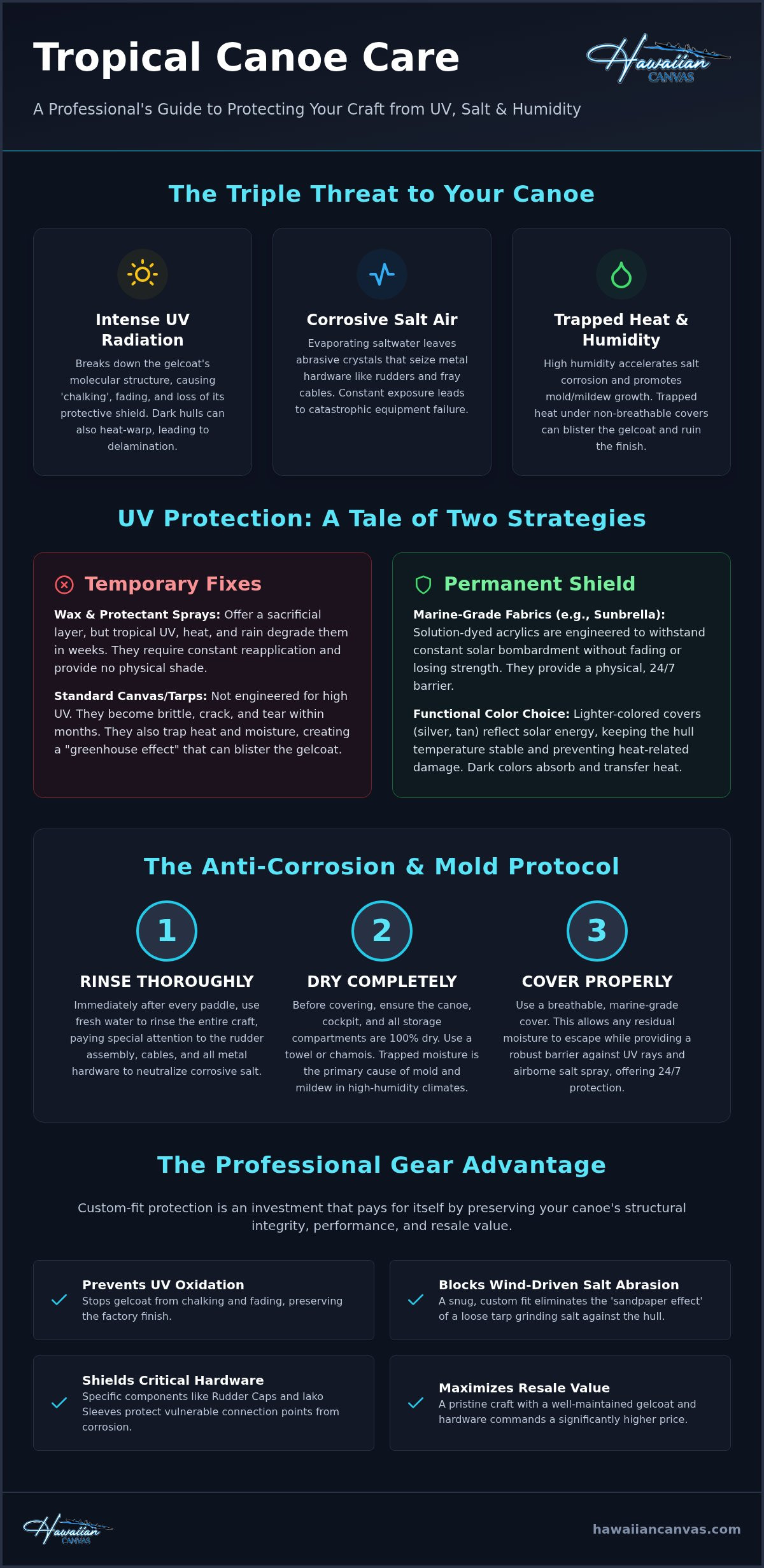
The Triple Threat: UV, Salt, and Humidity in the Tropics
The tropical environment is an endurance test for your equipment. Standard canoe care in tropical climates requires a shift in perspective. You aren't just cleaning a boat; you are managing a relentless chemical battle against the elements. UV radiation, salt spray, and humidity work in tandem to degrade materials that would last decades in cooler, drier zones. Resilience is the goal. Protection is the method.
Understanding the difference between weather-resistant and marine-grade protection is critical. Generic covers might handle a light rain, but they perish under the intense solar load of the 20th parallel. Marine-grade materials, like high-denier Sunbrella, are engineered for high-UV exposure and constant salt contact. They provide a physical barrier that prevents the environment from reclaiming your craft.
UV Radiation and Gelcoat Oxidation
The sun is relentless. It doesn't just fade paint; it destroys polymers. High UV levels break down the resin's molecular structure within your canoe's gelcoat. This process is called oxidation. You'll recognize it as 'chalking,' where the once-vibrant finish turns into a white, powdery residue. This isn't just a cosmetic failure. As the gelcoat becomes porous, it loses its ability to shield the underlying composite layers from water and heat.
Heat-warping is a secondary, often hidden danger. Darker hulls absorb immense thermal energy, leading to expansion and contraction that can cause delamination in composite hulls. A specialized cover acts as a heat shield. It maintains a stable temperature for the hull, preserving the structural geometry required for competitive ocean racing.
Saltwater: The Silent Corrosive
Salt is a physical abrasive. When saltwater evaporates, it leaves behind sharp crystals that act like sandpaper on your moving parts. These crystals migrate into the smallest tolerances of your steering system, rudder assembly, and rigging points. If left unchecked, the salt will seize metal hardware and fray stainless steel cables, leading to catastrophic failure during a session.
Rinsing your craft after a paddle is a standard ritual, but it's often insufficient for long-term storage. Airborne salt spray is pervasive in tropical coastal areas. It settles on the hull 24 hours a day, even when the canoe is on the rack. You need a proactive barrier to stop this accumulation. Effective protection includes:
- Rudder Caps: Shielding the steering mechanism from direct salt spray and UV damage.
- Custom-Fit Covers: Eliminating the 'chafing' effect where wind-driven salt grinds against the hull under a loose tarp.
- Iako Sleeves: Protecting the connection points where salt often builds up and causes oxidation between different materials.
Humidity acts as the final catalyst. In high-moisture environments, salt remains damp longer, accelerating the corrosion process. It also facilitates osmotic blistering, where moisture is pulled through a compromised gelcoat, creating pressure pockets that ruin the hull's finish. Proper storage and marine-grade covers are your primary defense against this structural decay.
UV Protection: Safeguarding the Hull and Gelcoat
Waxing is a ritual many paddlers swear by. In temperate zones, a good coat of carnauba might suffice for a season. However, effective canoe care in tropical climates requires a more robust defense. Tropical UV indices frequently reach extreme levels, where solar radiation penetrates chemical coatings in just a few weeks. Wax and UV-protectant sprays offer sacrificial layers that quickly evaporate or wash away under heavy rain and intense heat. They are useful for a quick shine, but they cannot provide the permanent shade your hull requires to prevent long-term degradation.
Marine-Grade Fabrics vs. Standard Canvas
Standard outdoor fabrics often use polyester or nylon bases that "crack" or become brittle after six months of direct sun. These materials lose their tensile strength and eventually tear under the weight of rainwater or wind. Marine-grade fabrics like Sunbrella are engineered for a different standard of performance. These are solution-dyed acrylics where the pigment is saturated into the fiber itself during the manufacturing process. This prevents the fabric from fading or losing its structural integrity under constant solar bombardment.
When selecting a cover, color choice is a functional decision, not just an aesthetic one. Lighter shades like silver, tan, or light grey reflect a higher percentage of solar energy. This keeps the hull temperature significantly lower than dark blues or blacks, which can absorb heat and transfer it directly into the composite materials. Light-colored, heavy-duty fabrics act as a heat sink, pulling thermal energy away from your gelcoat.
The Danger of Plastic Tarps and Non-Breathable Covers
Many owners make the mistake of using heavy plastic tarps or hardware-store covers. While these materials are waterproof, they are non-breathable. They create a dangerous "oven effect" where trapped air reaches temperatures exceeding 150 degrees Fahrenheit. This extreme heat can lead to osmotic blistering and even delamination of the composite layers as the resin begins to soften. Airflow is as important as shade.
Breathability is non-negotiable for tropical storage. It allows moisture to escape while blocking the UV rays that cause chalking and fading. Investing in custom outrigger canoe covers ensures your craft stays cool and dry, even in the peak of the midday sun. These covers provide a snug fit that prevents wind-driven salt from being trapped against the hull, which can act as an abrasive over time.
Don't ignore the cockpit and footwells. These recessed areas often collect standing water which, when combined with UV, acts as a magnifying glass for sun damage. A full-coverage strategy protects these vulnerable points from fading and structural fatigue. For the best results, look for gear handcrafted by practitioners who understand these specific failure points. You can find high-quality OC1, OC2, and V1 covers designed to survive these exact conditions.
Saltwater Management: Corrosion Prevention for Hardware
Saltwater is a relentless adversary. It doesn't just sit on the surface; it migrates into the smallest tolerances of your hardware. Effective canoe care in tropical climates requires a mindset of total exclusion. You must treat salt like a fine abrasive that is constantly trying to grind down your steering and rigging. In the heat of the tropics, salt dries rapidly, forming hard crystals that can seize adjustable parts in a matter of days. Identifying the corrosion-prone zones in your OC1 or OC6 setup is the first step toward long-term reliability.
Rudder and Steering Maintenance
The steering system is your canoe's most vulnerable mechanical assembly. Salt crystals act as micro-abrasives inside the cable housings, leading to "fraying" of stainless steel lines. This friction eventually causes the cable to snap under the high tension of ocean racing. Routine inspections are mandatory. Look for small "fish-hook" burrs on the wire, which are early indicators of salt-induced fatigue. If you feel resistance in the pedals, salt buildup is likely already compromising the housing.
Rudder caps provide an essential line of defense. These specialized covers shield the rudder assembly from both direct salt spray and UV-induced sun-rot on plastic or rubber components. By keeping the assembly covered during transport and storage, you significantly reduce the frequency of cable replacements. Lubrication is also vital. Use a marine-grade dry lubricant to prevent salt from sticking to the cables without attracting sand or grit. Avoid heavy greases that can trap salt and create a corrosive paste.
Rigging and Iako Protection
Rigging points are high-stress zones where salt and humidity often pool. This creates a breeding ground for galvanic corrosion, especially in OC6 setups where metal hardware meets composite materials. In adjustable ama systems, salt buildup can cause the telescoping parts to "seize" permanently. This renders your craft impossible to tune for specific swell conditions. Proper protection ensures these parts remain mobile for the life of the canoe.
Iako sleeves are an artisanal solution to this industrial-grade problem. They provide a physical barrier that prevents salt and UV rays from reaching the connection points. This feature maintains the mobility of your rigging while protecting the underlying finish from the "chafing" caused by salt-laden wind. For those using an OC1 or OC2, these sleeves are an investment in hull longevity and resale value.
Daily Post-Paddle Checklist:
- Flush the rudder box and footwells with low-pressure fresh water to dissolve salt deposits.
- Wipe all stainless steel components with a dedicated cloth to remove mineral residue.
- Check the ama adjustment pins and holes for any signs of salt crystallization.
- Apply protective gear, including rudder caps and iako sleeves, before securing the full cover.
Transporting your craft on a vehicle exposes it to high-velocity salt spray. This force-feeds salt into the cables and rigging at highway speeds. Always use heavy-duty covers to seal these components during transit. This ensures your hardware remains reliable and ready for the water, even after 365 days of tropical exposure.
Humidity and Storage: Preventing Mold and Mildew
Tropical humidity is more than a discomfort for the paddler. It is a biological threat to the craft. High moisture levels, combined with the heat of the sun, turn the interior of your hull into a breeding ground for mold and mildew. Effective canoe care in tropical climates hinges on your ability to manage this internal microclimate. If you cover a canoe while it is still damp, you are essentially incubating fungal spores that can permanently stain the gelcoat and damage internal foam cores.
Venting is your primary defense. A marine-grade cover should provide a physical barrier against UV while allowing moisture to escape. This strategic airflow prevents the "sweating" that occurs when temperatures fluctuate between the heat of the day and the humidity of the night. Without breathability, your cover becomes a greenhouse for biological decay.
Cockpit and Interior Care
The cockpit is the most frequent site of mold accumulation. Standing water in the footwells or seat tracks will quickly lead to black mold growth. Using specialized cockpit covers helps keep rain and debris out during storage while still allowing necessary airflow through the rest of the hull. It's a simple step that saves hours of scrubbing later.
Your choice of accessories also impacts moisture management. Padded canoe seats with removable components are superior for tropical use. They allow you to take the padded sections out for complete drying in the sun, preventing moisture from being trapped against the hull for weeks at a time. Don't forget the ama. Many outrigger amas lack drainage plugs. You must ensure they are completely drained and vented before you secure them for storage.
Long-Term Storage Solutions
Rack positioning is a critical factor in hull longevity. Store your craft in a way that minimizes direct solar gain, ideally under a structure that provides constant shade. However, even in the shade, ground-level humidity can rise and affect the underside of the craft. Storing the canoe at a slight angle can help any residual moisture pool toward a drainage point rather than sitting flat against the composite.
Ama covers are often overlooked but essential for total protection. These secondary hulls are frequently closer to the ground where humidity is highest. Protecting them with custom-fit covers prevents mold from taking root on the bottom surface. Perform an off-season check every 30 days. Look for any signs of moisture buildup or spore spots on your fabric covers. Cleaning your covers with a mild, marine-safe solution prevents spores from migrating from the fabric to the boat itself.
Protecting every component of your setup is the only way to ensure structural integrity and maintain your craft's value. You can find specialized Ama Covers and Iako Sleeves designed to withstand these specific humidity challenges and provide the ventilation your canoe needs.
Professional Gear: The Role of Custom-Fit Protection
Standard "one-size-fits-most" bags are a liability in high-wind coastal areas. They flap. They vibrate. They allow wind-driven salt to migrate between the fabric and the hull. This creates a sanding effect that destroys your gelcoat finish over time. Effective canoe care in tropical climates depends on a precise, custom fit. A cover that matches the exact lines of your OC1 or Surf Ski eliminates this movement. It seals out the environment. It provides the quiet confidence that your craft is protected while you're away from the water.
Investing in professional-grade protection is an investment in your craft's longevity. A high-quality cover pays for itself by maintaining the factory finish and structural integrity required for ocean racing. When you consider the cost of gelcoat repair or the loss in resale value from sun damage, the ROI of a custom cover is clear. It is the difference between a canoe that lasts five years and one that stays competitive for fifteen.
Handcrafted Durability
Mass-produced gear often cuts corners on the details that matter most in the heat. Tropical environments demand industrial-grade components. We use heavy-duty zippers that won't seize and marine-grade thread that resists UV rot. Every piece is handcrafted by fellow practitioners who understand the stress points of a canoe. We reinforce the bow and stern where tension is highest. This is gear built for real ocean conditions, not just a showroom floor.
The artisanal approach ensures that every seam is double-stitched and every reinforcement point is strategically placed. This level of craftsmanship cannot be replicated in a factory. It requires a deep understanding of how the wind and sun interact with the fabric over 365 days of exposure. Our use of heavy-duty, UV-resistant fabrics ensures the cover won't become brittle or "crack" after a single season of intense solar load.
Comprehensive Protection Kits
A hull cover is only one part of the strategy. Total protection requires a system-wide approach. You need to shield the entire craft. Ama covers and iako sleeves prevent the secondary components from aging faster than the main hull. These parts are often more susceptible to salt-seizing and UV-rot because they have smaller tolerances and different material compositions. Covering the whole system ensures uniform protection across your entire setup.
Even your accessories require specialized care. A Sunbrella paddle bag protects your blade from the same UV degradation that threatens your canoe. Accessory pouches and padded seats should also be stored in a way that allows them to dry while remaining shielded from the sun. By treating your gear as a complete system, you ensure that every component is ready for the water when you are. Protect your investment with handcrafted Hawaiian gear.
Secure Your Craft for the Long Haul
Mastering canoe care in tropical climates is a discipline of consistency. You've seen how the combination of extreme UV radiation and corrosive salt spray can degrade even the highest quality composite hulls. By implementing a rigorous post-paddle ritual and utilizing breathable, marine-grade barriers, you ensure your craft remains ready for the next swell. It's about protecting the structural integrity and resale value of your investment through specialized strategies.
Our gear is handcrafted in Hawaii and field-tested in these exact conditions. We use heavy-duty Sunbrella fabric to provide the resilience your canoe needs to survive 365 days of tropical exposure. This isn't just about storage; it's about providing a professional-grade defense against the elements. Shop Custom Marine-Grade Canoe Covers and give your craft the protection it deserves. Keep your focus on the water, knowing your gear is secure on the rack.
Frequently Asked Questions
Can I use a generic blue tarp to cover my outrigger canoe?
Using a generic blue tarp is a mistake. These materials are non-breathable and trap heat against the composite. This creates an oven effect that leads to gelcoat blistering and delamination. Tarps also lack a snug fit, meaning they flap in the wind and grind salt crystals into your finish. Effective canoe care in tropical climates requires a custom, breathable barrier that manages heat while blocking UV radiation.
How often should I wash my marine-grade canoe cover?
Rinse your cover with low-pressure fresh water once a week. This simple ritual removes the salt spray that accumulates even when the craft is on the rack. For a deeper clean, use a mild, marine-safe soap and a soft brush every three months. This prevents mold spores from taking root in the fabric fibers. Always allow the cover to dry completely before folding it for storage.
Do I really need to cover my ama if it's stored in the shade?
Shade alone is insufficient. Ambient UV radiation and pervasive airborne salt spray still reach your gear under a roof or tree. Humidity also remains high near the ground, which encourages mold growth on uncovered surfaces. Using ama covers ensures the secondary hull is protected from the same corrosive elements as the main craft. It maintains the resale value and structural safety of the entire system.
What is the best way to prevent gelcoat oxidation in the tropics?
Total solar exclusion is the most effective strategy for canoe care in tropical climates. While waxes and sprays offer temporary protection, they evaporate quickly in extreme heat. A heavy-duty, UV-resistant cover provides a permanent shadow for your hull. This stops the chemical breakdown of the resin bonds before oxidation begins. Consistent covering is the only way to prevent the chalking and fading that ruins a high-performance finish.
Should I store my surf ski with the rudder on or off?
Storing with the rudder on is acceptable if you use a rudder cap. These specialized accessories protect the steering assembly from sun-rot and salt buildup. If you choose to leave it on, ensure the cables are rinsed and lubricated with a dry marine lubricant. Without a cap, removing the rudder is safer for long-term storage. It prevents the small plastic and rubber components from becoming brittle in the sun.
How do I get salt stains out of my heavy-duty canvas cover?
Dissolve salt stains using a mix of lukewarm water and a very mild detergent. Gently scrub the affected area with a soft-bristle brush to lift the crystals without damaging the fabric's protective coating. Rinse thoroughly with fresh water. Never use bleach or power washers, as these can destroy the UV-resistant properties of the canvas. Regular maintenance prevents salt from becoming a permanent, abrasive fixture on your gear.
Is it safe to transport my canoe in its cover on a roof rack?
Transporting in a cover is safe if the fit is precise. Custom-fit covers are designed to hug the hull, which eliminates the flapping that causes surface abrasion at high speeds. This also shields your rudder cables and rigging from high-velocity salt spray during the drive to the beach. Always verify that all straps and zippers are fully secured before you hit the road to ensure maximum safety.
How long should a high-quality UV-resistant cover last?
A professional-grade cover built from Sunbrella should provide several years of reliable service in extreme conditions. These fabrics are solution-dyed, meaning the color and UV-resistance are saturated through the fiber. This prevents the material from becoming brittle or "cracking" like standard polyester. Your cover’s lifespan will depend on regular rinsing to remove salt and ensuring it is stored dry to prevent mold degradation of the stitching.